I Built an App. Now What?
How to Market an App: Get Your First 100 Users in 2026

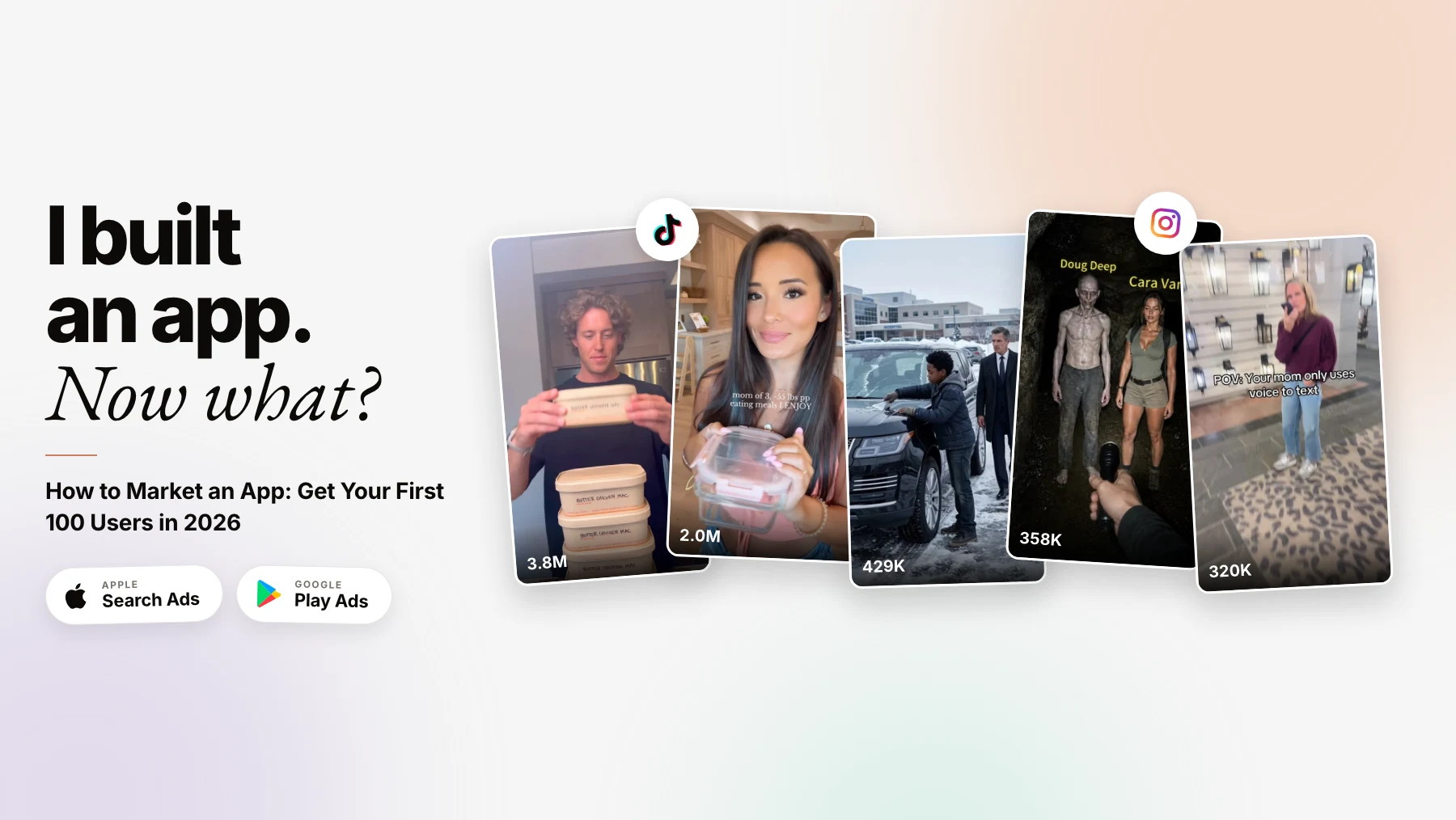
Publishing your app is not the launch.
You can spend three months building, pass App Store review, hit Publish, and get:
No installs. No reviews. No signal.
That doesn’t necessarily mean the product failed.
It means shipping and distribution are two different projects.
The real sequence is:
Can I ship it? → Can I get anyone to try it? → Do they stay or pay? → Can I acquire more of them profitably?
Apple’s own App Store Connect analytics is built the same way — discovery, downloads, engagement, purchases, subscriptions, retention and acquisition sources are separate reports, not one “downloads” number.
Most builders jump too quickly to the last question.
Here’s the order I’d actually work in.
1. Why 2026 is a real window
Two things changed at the same time, and they compound.
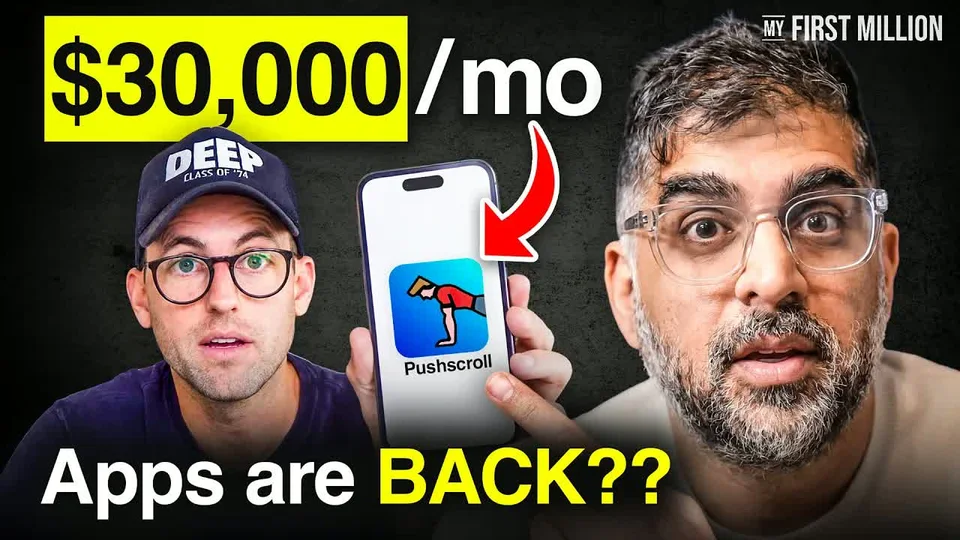
Building got cheap. AI coding tools collapsed the cost of shipping a decent app. On My First Million, Starter Story founder Pat Walls described how an iPhone app once needed a designer, a product person, and two engineers. Now one person can often do it.
Discovery moved. TikTok, Reels, and Shorts became genuine app-discovery channels, so you no longer need to win App Store charts to get found.
 Dumb iPhone Apps Are Making People Rich AgainMy First Million · with Pat Walls of Starter Story · why small iOS apps are back
 I Built a $100K/Month Android AppStarter Story · the Android opportunity most builders skip
Walls says he talks to roughly twelve founders a week, and about half are doing well with iOS apps. Some are surprisingly simple:
- an app that forces you to do push-ups before unlocking social media, doing $30K/month
- another that makes you pray first
- a vape tracker that simply counts puffs
But the most interesting part is how the push-up app started.
They made the viral video before they made the app.
They filmed themselves pretending the product already existed, posted it alongside several other fake app ideas, and that concept got hundreds of thousands of views. Then they built it.
Build ten apps that fail and you lose a year. Test ten ideas with videos and you may lose ten days.
For consumer apps, validation can start with content before code.
The opportunity is bigger on Android than most people think
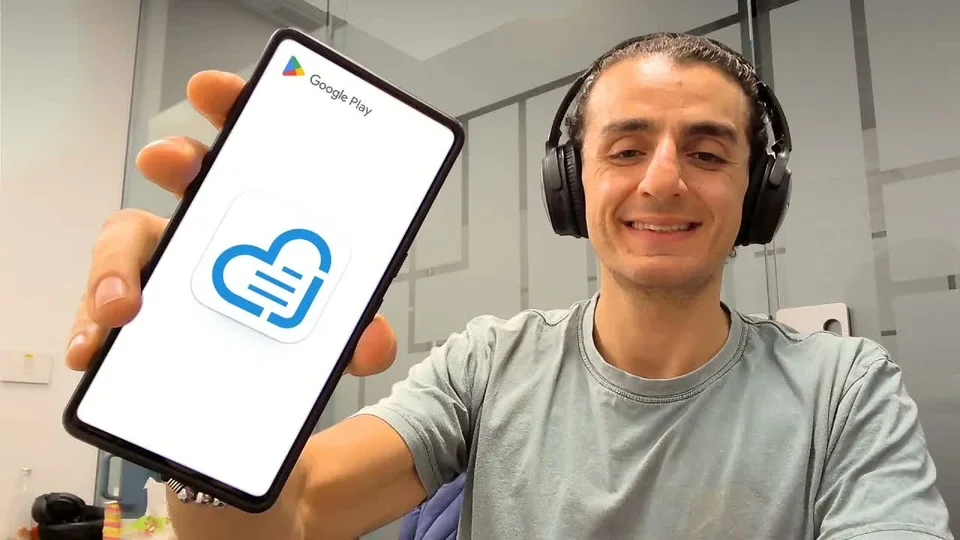
The second interview is where the window gets concrete. On Starter Story, the founder of an AI calorie counter describes growing from under $1K/month to $100K/month in 18 months — with 80% of both users and revenue coming from Android.
| Metric | Result |
|---|---|
| iOS cost per view / CPM vs Android | ~4× higher |
| iOS conversion advantage | ~20% |
| New iOS apps, last two years | ~5× more |
| New Android apps | ~2× more |
| Android share of users and revenue | 80% |
| Android downloads | ~1M |
| Last 28 days | $125K revenue |
| MRR | ~$80K |
| Active subscribers | ~30K |
Read the first two rows together: if iOS costs around 4× more to reach but converts only around 20% better, the economics may favor Android. He tested both, Android kept winning, and Android spend generated spillover iOS installs anyway.
2. Research your niche and spy on what your competitors are doing
Before making videos or spending money, answer:
Who is already winning? What are they saying? How are they actually acquiring users?
We run this research regularly, and the differences between categories are bigger than most people expect. Product names are withheld below; the public creator posts are linked.
AI calorie tracking: creators own the attention
In one category sweep, official brand accounts were posting consistently but getting 3,230, 11,800 and 4,645 views.
Creators covering the same underlying behavior were getting this:
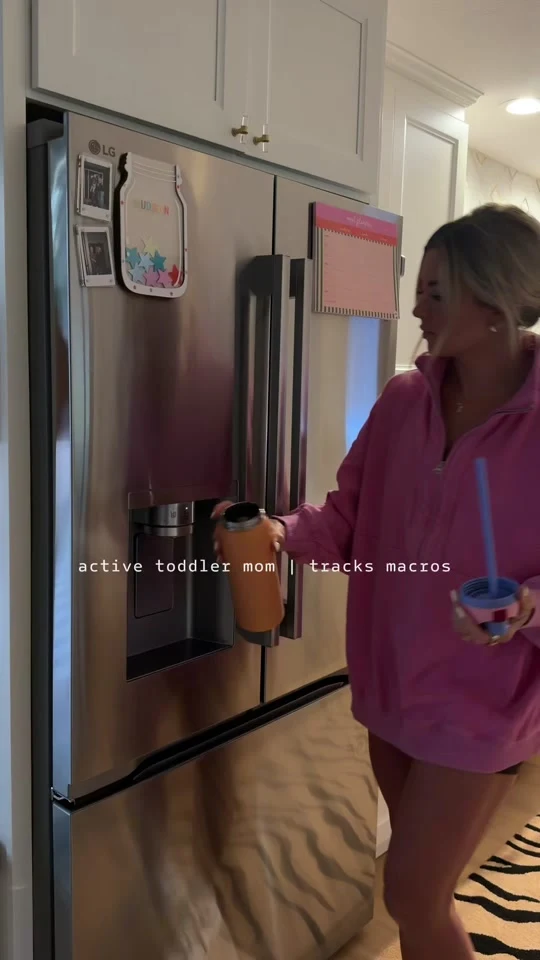 Full day of eating66.1K views · @brittanyvoges
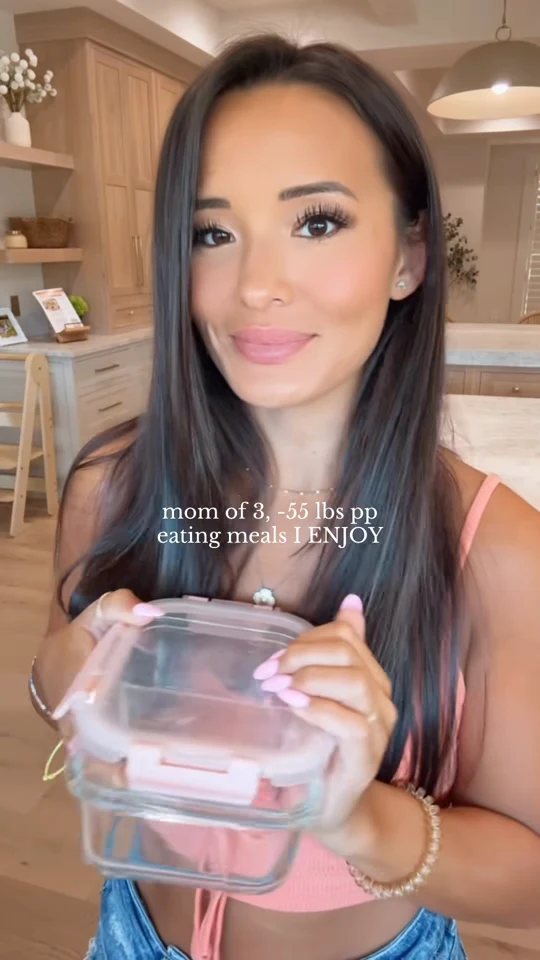 Easy meal prep2.0M views · @makayla_thomas_fit
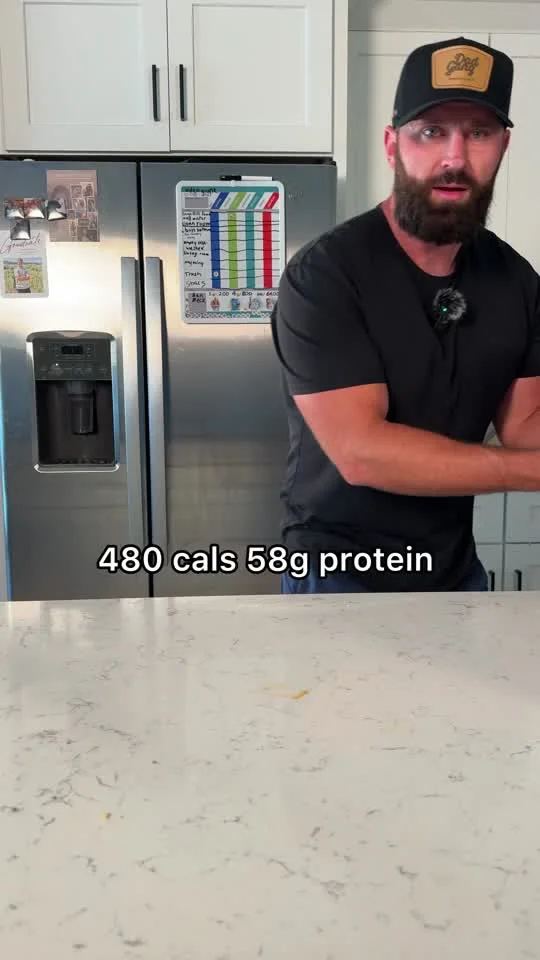 Fast-food makeover638.9K views · @tastyshreds
None of those videos were app demos. They were about food, habits, routines, and identity. The app was secondary.
Lesson: don’t lead with product features. Create or sponsor the content your target customer already wants to watch.
AI voice typing: the category is bought
Almost the opposite pattern.
One funded competitor was running 13 ads under its own Page plus 12 more through five whitelisted creator Pages. Others had 25, 19, and 8 live creatives.
Organic brand content was weak — the best official TikTok post we found across three months had only 2,066 likes, and no confirmed competitor’s organic content exceeded 40K anywhere.
Creators did much better:
 POV parody320.8K likes · @jacksonheinze
 Split-screen demo39.3K likes · @bhatti0.3
 Product skit36.2K likes · @keidokindness
And one competitor had an outlier YouTube Short with 11M views.
Lesson: in this category, paid distribution and creator placements matter far more than posting from the brand account.
AI character and story apps: the content is the product
Here the top five creator posts generated 26M total views. Again, none were app walkthroughs — they were serialized AI stories, POVs, and character skits.
 AI story series429K likes · @redditsora
 Interactive POV358K likes · @mysteriousgarden5
 Character skit317K likes · @hamzzythecreator
The strongest brand post was also not a traditional ad — the company posted in character and reached 815K views. Every other official account topped out around 54K. And these formats need no cast, no location, no traditional shoot. The constraint is story quality, not production budget.
Lesson: if you’re in entertainment, don’t behave like an app-review account. Make the entertainment itself.
Three categories. Three very different answers. That’s why research comes before the content calendar.
How to run this yourself
Search your competitors by name on TikTok, Instagram and YouTube. Then search the keywords your users would use — not your category.
Building an AI calorie tracker? “calorie tracking app” mostly shows you competitors. Your users are searching what I eat in a day, macro counting, food scan, high protein meals, cutting, body recomposition.
Write down 10–20 phrases in their language, then look for videos with unusually high views relative to account size, recurring hooks, repeated formats, and what happens in the first three seconds.
Then check paid. The Meta Ads Library tells you what companies will keep paying to distribute — count active creatives, see how long they’ve run, note which creators they whitelist. An ad running for months is more interesting than one launched yesterday. TikTok’s Creative Center gives another view by category and geography.
Study three groups, not one:
1. Competitors — pricing, trial length, paywall placement, creators, hooks, landing pages, ads.
2. Creators in your niche — not app reviewers, but the nutrition coaches, productivity creators, personal-finance explainers and fitness creators already teaching your target users. They’ve learned which hooks make your exact audience stop scrolling.
3. Service businesses selling to the same users — agencies, coaches, consultants and courses have higher margins per customer, so they can afford to understand the messaging deeply.
Don’t ask where you can promote your app. Ask where people already talk about the problem your app solves.
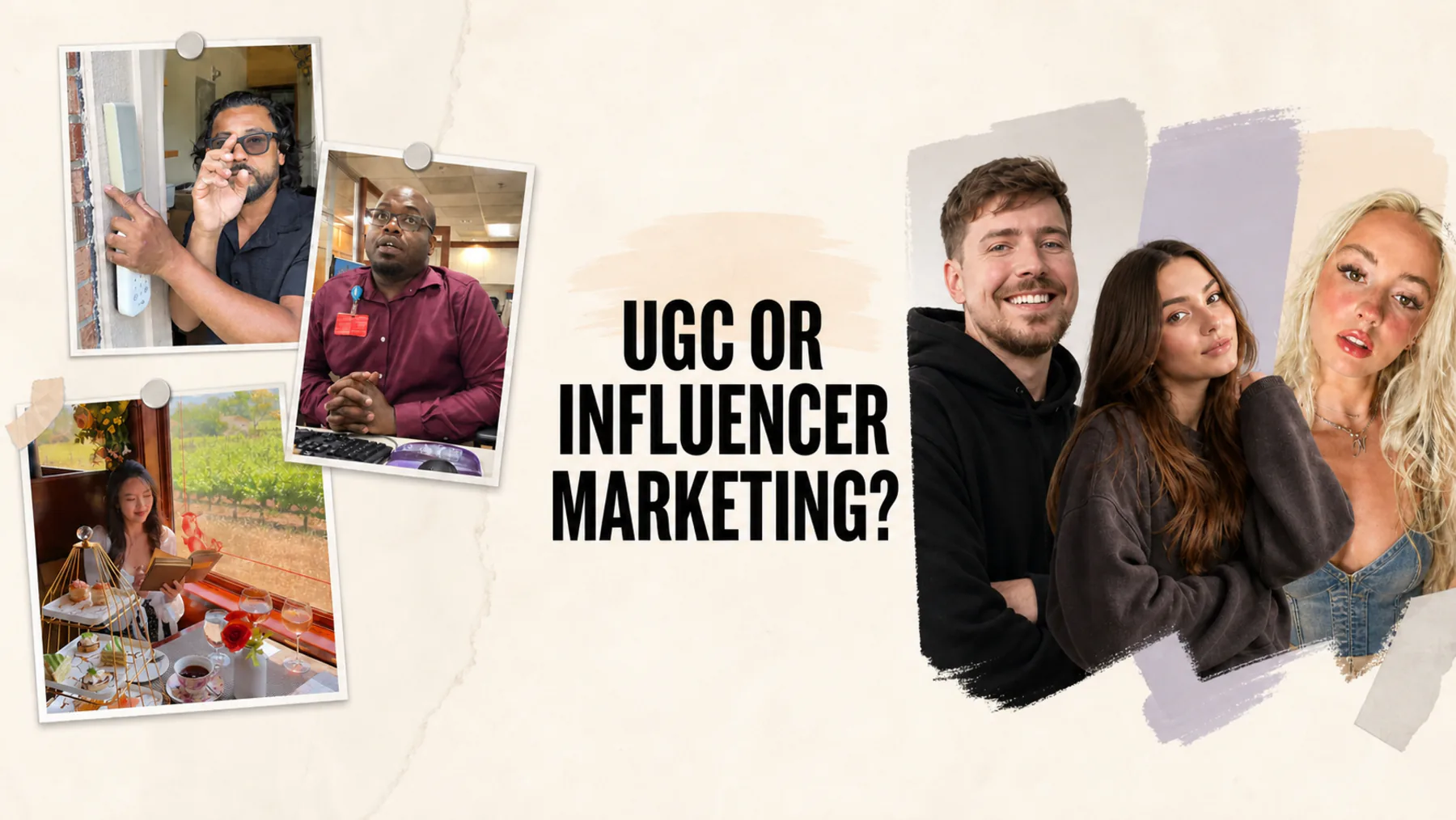
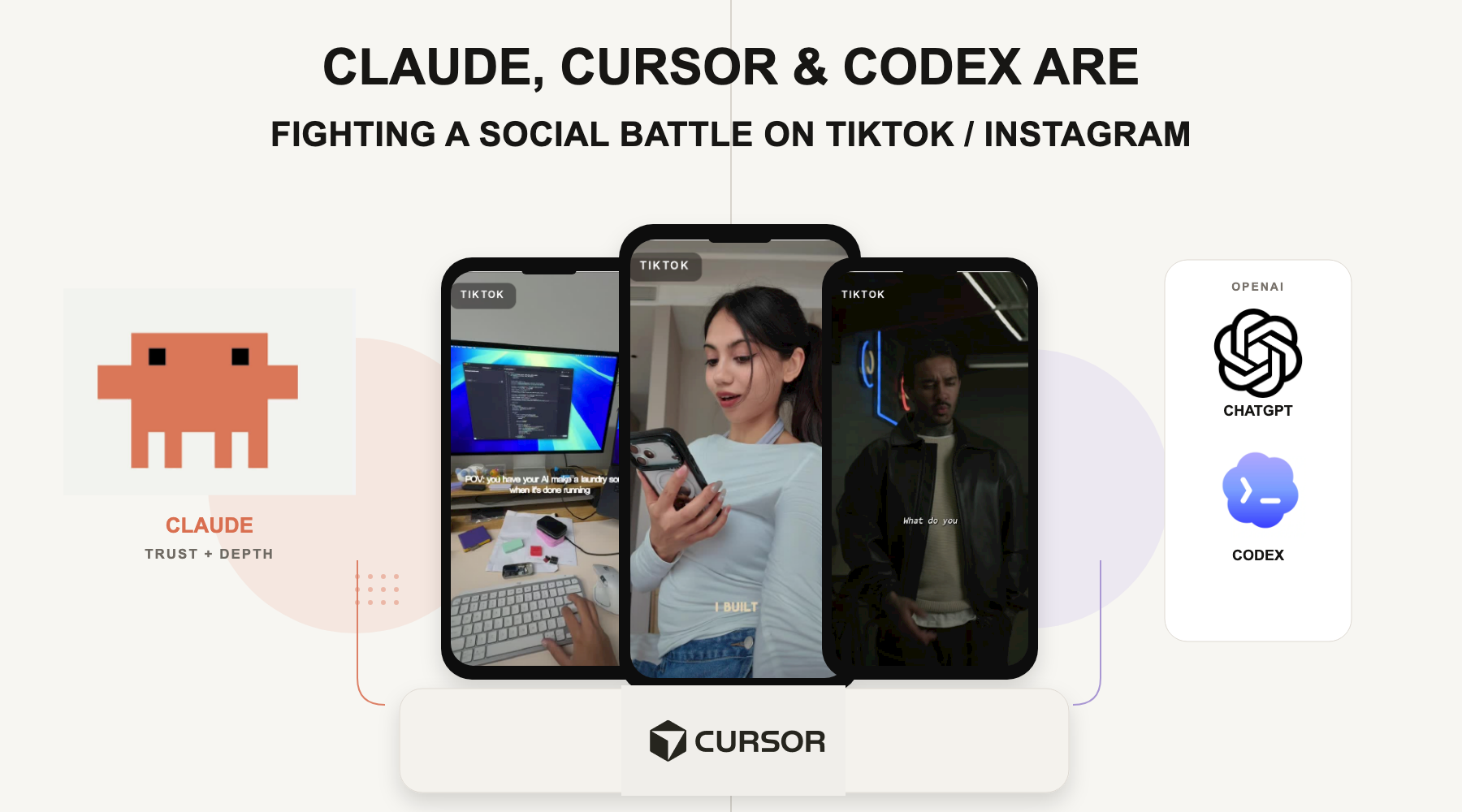
I’ve written more on this in choosing between UGC and influencer marketing, how Claude, Cursor and Codex fight the same battle, and the AI influencer playbook behind running AI-generated creators and UGC at volume.
Or have it done for you. Most founders don’t need more random content ideas — they need to know what is already working with the audience I want. That’s what we built AdAnt to research: give it your product URL and it studies competitors and creators across TikTok, Instagram and YouTube, then turns the strongest hooks and formats into content ideas and short-form videos you can test. You can get a free Social Content Strategy Report for your app — bring your product URL and we’ll show you the competitors, formats, and angles I’d test first.
3. How to actually get your first 100 users
Don’t treat “first 100 users” as a vanity milestone. Use them to answer: who cared enough to try, why they installed, what they expected, whether they reached the core value, whether they came back, and whether they’d tell someone.
100 users you understand are more useful than 10,000 you don’t.
The goal at this stage is not scale. It’s signal. Here’s the order I’d work the channels.
Step 1 — Friends, family, and people who already have the problem
Your first ten users should be people you can talk to. Not for vanity installs — for the conversation afterward. Watch someone open the app for the first time without helping them. You will learn more in twenty minutes than from a week of analytics.
Then widen to people who have the problem but don’t know you. Communities, group chats, your own network's network.
Step 2 — Fix ASO before you send anyone anywhere
Every ad, viral video, and creator post eventually lands on your store page. If it converts at 2% instead of 5%, every channel you ever use becomes 2.5× more expensive.
Apple gives you Product Page Optimization to test icon, screenshots and preview video, and Custom Product Pages to send different audiences to differently-argued versions of the app. Google Play has Store Listing Experiments.
Most small apps never run one. Unlike a one-off growth tactic, conversion multiplies every traffic source you already have.
Traffic × conversion × retention compounds.
Step 3 — Apple Search Ads and Google, to buy a number
I disagree with the advice that you should never run ads before product-market fit. Run them early — just know what you’re buying.
Before product signal, ads are research. After product signal, ads become distribution.
Run a small Apple Search Ads campaign on iOS and the Google equivalent on Android. The goal isn’t volume. It’s to establish your own cost per install, for your app, in your category, in your geography — not someone else’s benchmark.
Search ads work for this because the intent already exists, so you’re measuring the cheapest install you will ever buy. Every other channel gets compared against that number.
Step 4 — Reddit and the communities that already argue about your problem
Now go where the problem is discussed. Not to drop a link — to be useful in threads where people are already complaining about exactly what you fixed.
This is slow, unscalable, and the highest-signal traffic you will get all year. The people who install from a comment thread are the ones who will tell you why your onboarding is confusing.
Step 5 — TikTok, Instagram and YouTube Shorts
Now use the research from the last section. Take the strongest hooks, formats, story structures, personas and angles you found — and rebuild them for your product. Not copy. Adapt the pattern.
Post across all three platforms. Most videos will fail; that's the mechanism working. You're looking for outliers — saves, shares, unusually strong watch time, comments asking for the app name.
When something works, don’t chase a new idea. Make five variations: change the hook, the first three seconds, the persona, the setting, the script — and keep the winning underlying concept.
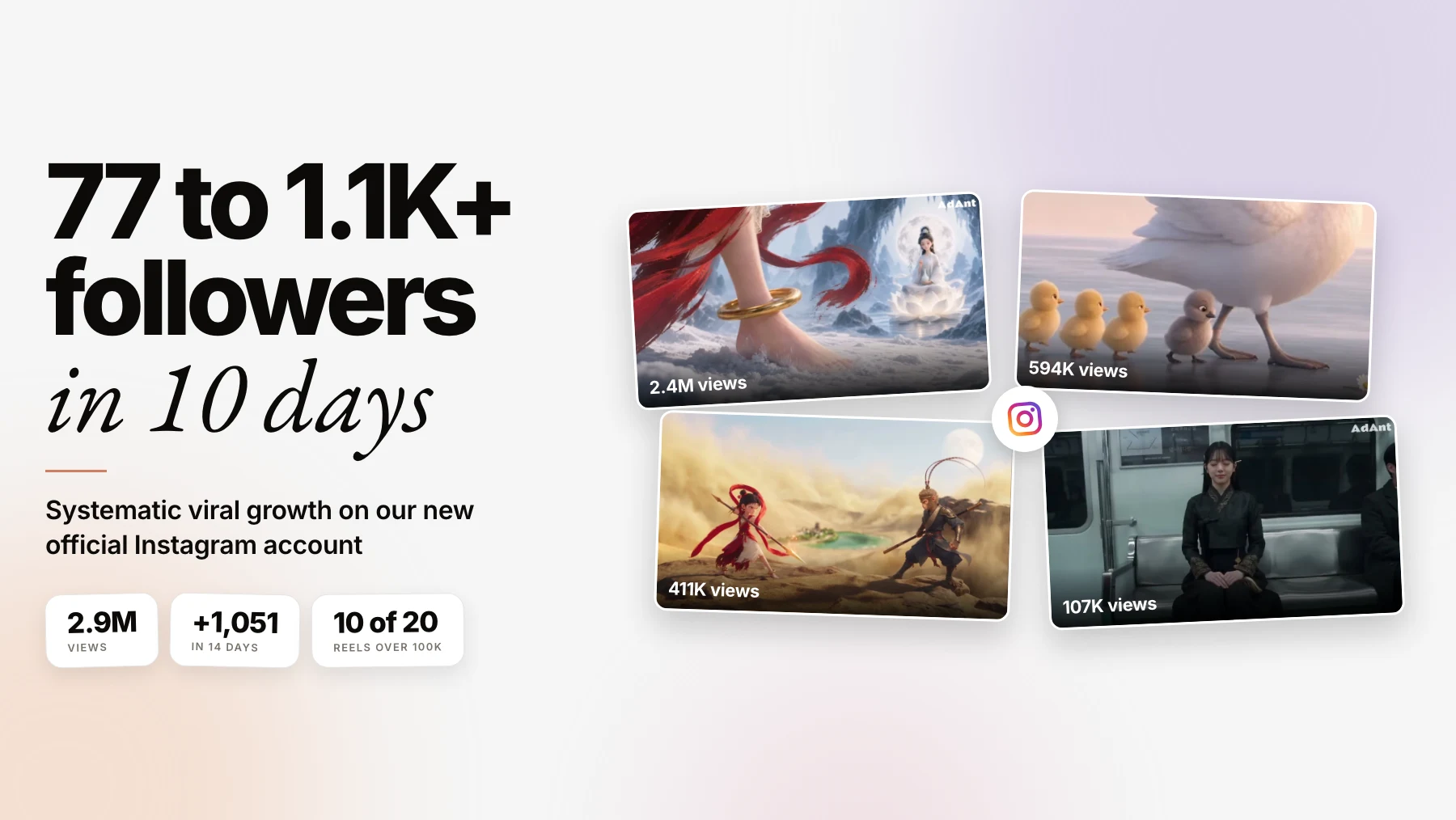
Across our own campaigns we’ve launched 10+ new accounts that reached 300K+ organic views within their first 5–10 posts, sometimes millions. Across roughly six months: 50M+ organic views, with individual videos around 8M views.
Step 6 — Put paid behind what already won
The most important part came afterward. We turned the organic winners into paid creatives, and putting TikTok and Meta spend behind already-proven creative reduced CAC by as much as 60%.
Organic is your creative-testing lab. Paid scales what wins.
Running it the other way round — invent an ad, buy reach, hope — is how small teams spend their budget learning what a free post would have told them in a week.
4. How to scale: the metrics that decide it
Retention quietly controls everything. If users disappear after day one, buying more installs gives you a larger chart, not a stronger business.
| Goal | Optimize for |
|---|---|
| Prove demand | Activated users + feedback |
| Grow users | Qualified acquisition + retention |
| Grow revenue | Paid conversion + revenue/user |
| Grow profit | Contribution after CAC |
| Scale | Profitable retaining cohorts |
For subscription apps, pull current category data from RevenueCat’s State of Subscription Apps. Conversion and retention vary significantly by category, geography, store and plan duration — there is no universal “good” benchmark.
Track the CAC that actually matters
CAC = acquisition spend ÷ customers acquired.
The word customer causes the confusion. Track three numbers:
Cost per install — spend ÷ installs. Compares channels. Says nothing about profitability.
Cost per activated user — spend ÷ users who reached the product’s core value. Your product signal.
CAC to payer — spend ÷ paying users. The only one you compare against revenue.
Spend $500. Get 100 installs. CPI = $5.
40 activate. Cost per activated user = $12.50.
10 subscribe. CAC to payer = $50.
The $5 CPI looks good. The real question is whether that $50 payer eventually produces more than $50 in contribution.
Be careful with LTV
LTV ≈ monthly revenue per payer × months retained × gross margin
One variable is dangerous: months retained. If the product has existed for four months, you do not know twelve-month retention. Early LTV is often a forecast pretending to be a measurement.
Watch instead: payback period, realized revenue at day 30 / 90 / 180, and gross contribution after CAC.
Suppose a payer costs $50 and generates only $20 before churning. That isn’t a scalable channel — you’re reliably turning $50 → $20. More budget doesn’t fix it. Better onboarding, retention, pricing, targeting or monetization does.
Your app isn’t profitable because a spreadsheet predicts high LTV. It’s profitable when cohorts actually earn back what you spent acquiring them.
Scale only when three things are true
1. Contribution exceeds CAC — on real cohorts, not projected LTV.
2. Payback is short enough to finance — a channel can be profitable and still kill your cash flow if payback takes 18 months.
3. Retention survives broader targeting — if retention collapses as you increase spend, you found a small pocket of good users, not a scalable channel.
When all three hold, more budget stops being a gamble and becomes arithmetic.
The playbook
If I were launching a consumer app today:
Validate with content before code → Research competitors, creators, and paid ads → Launch → Talk to your first users → Fix store conversion → Buy a CPI baseline → Work the communities → Test organic creative → Put paid behind the winners → Scale only when real cohorts are profitable
The main idea is simple:
Building the app gets you into the game. Distribution decides whether anyone notices.
And distribution isn’t one channel. It’s a system: Research → creative → traffic → conversion → retention → monetization → scale.
Founder of AdAnt and author of The Social Signal, researching AI-powered creator marketing, organic social, and paid-ad creative systems.