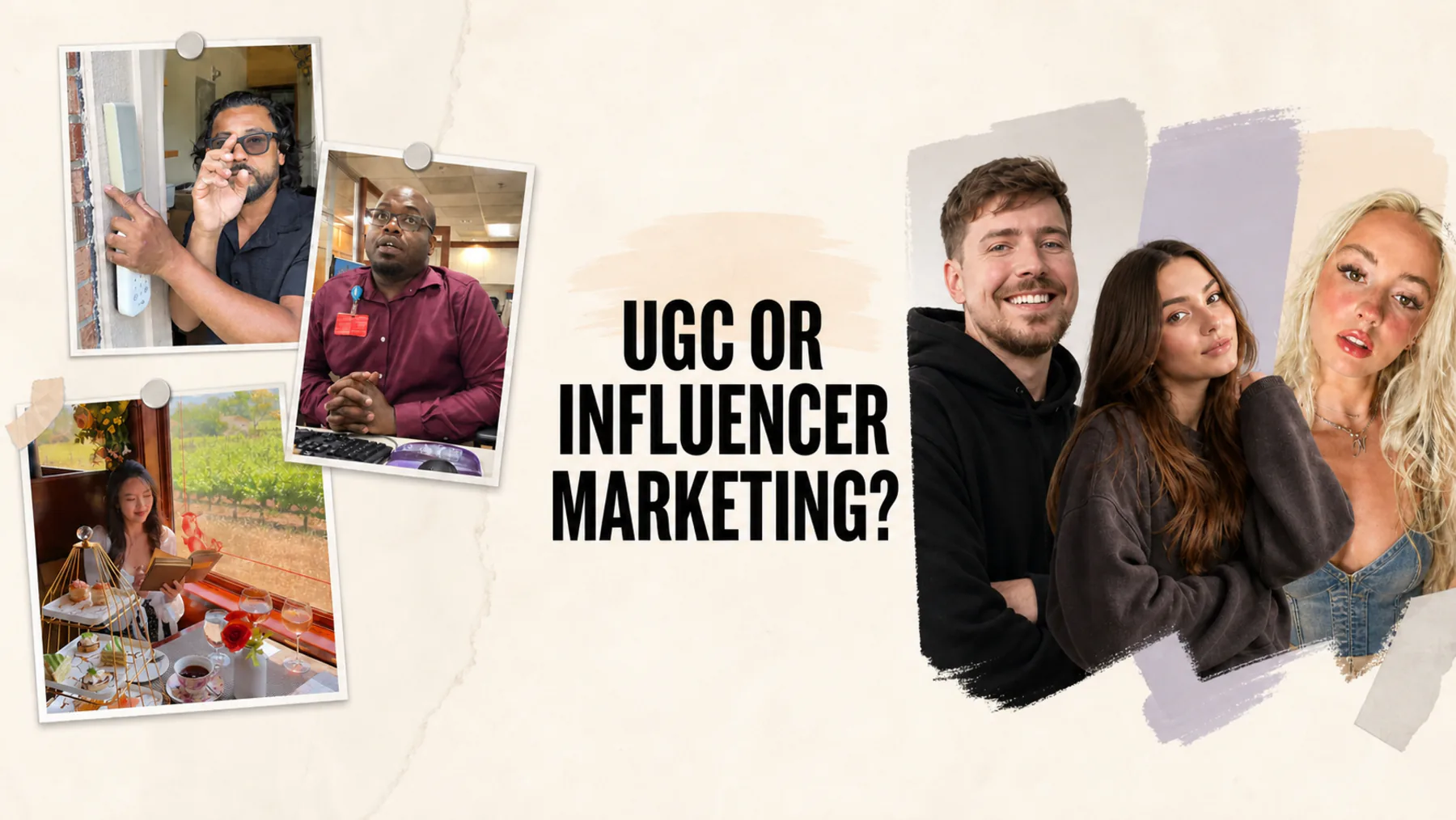
UGC or Influencer Marketing?
A practical playbook for combining creators, UGC, and paid amplification.

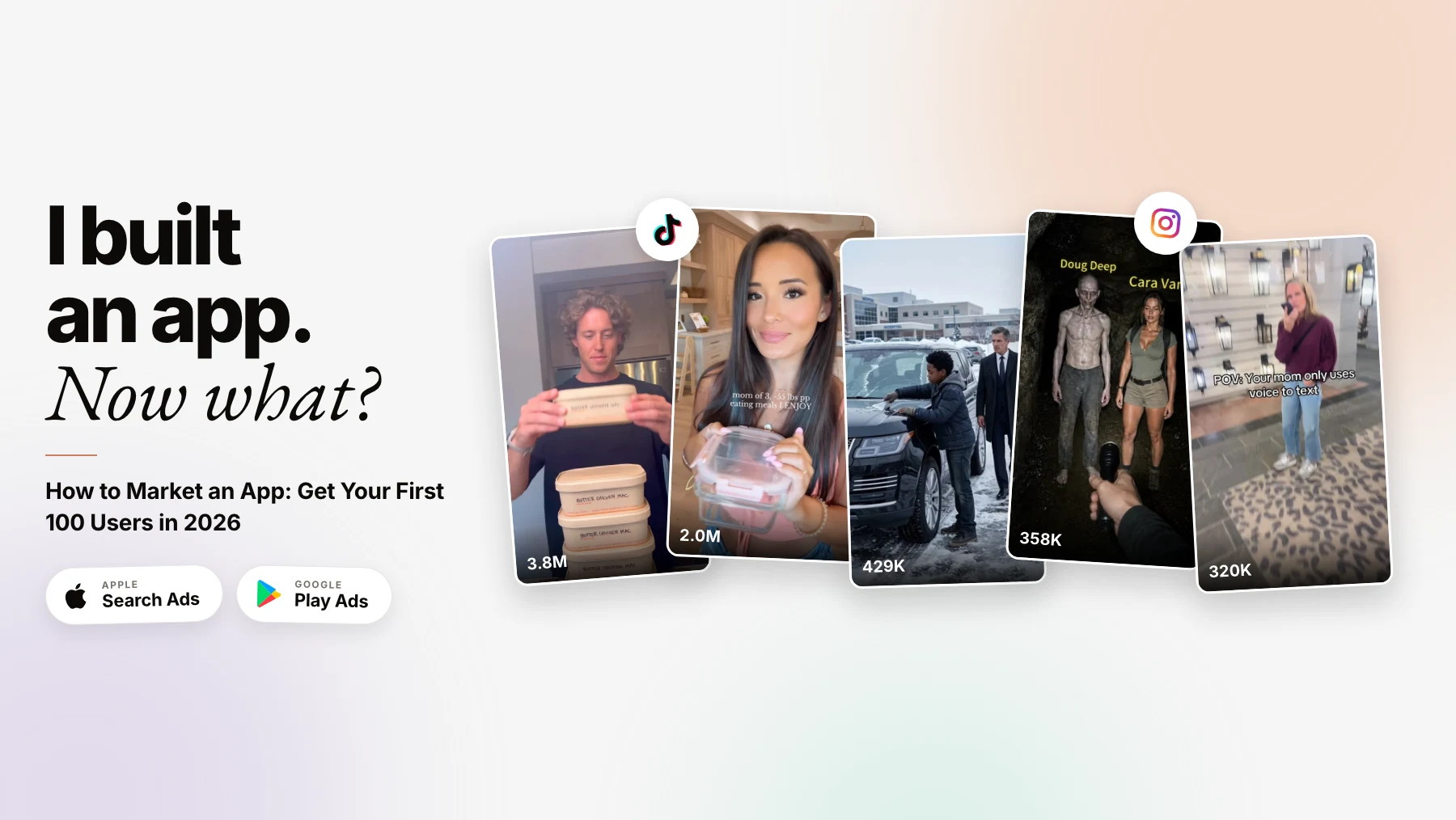
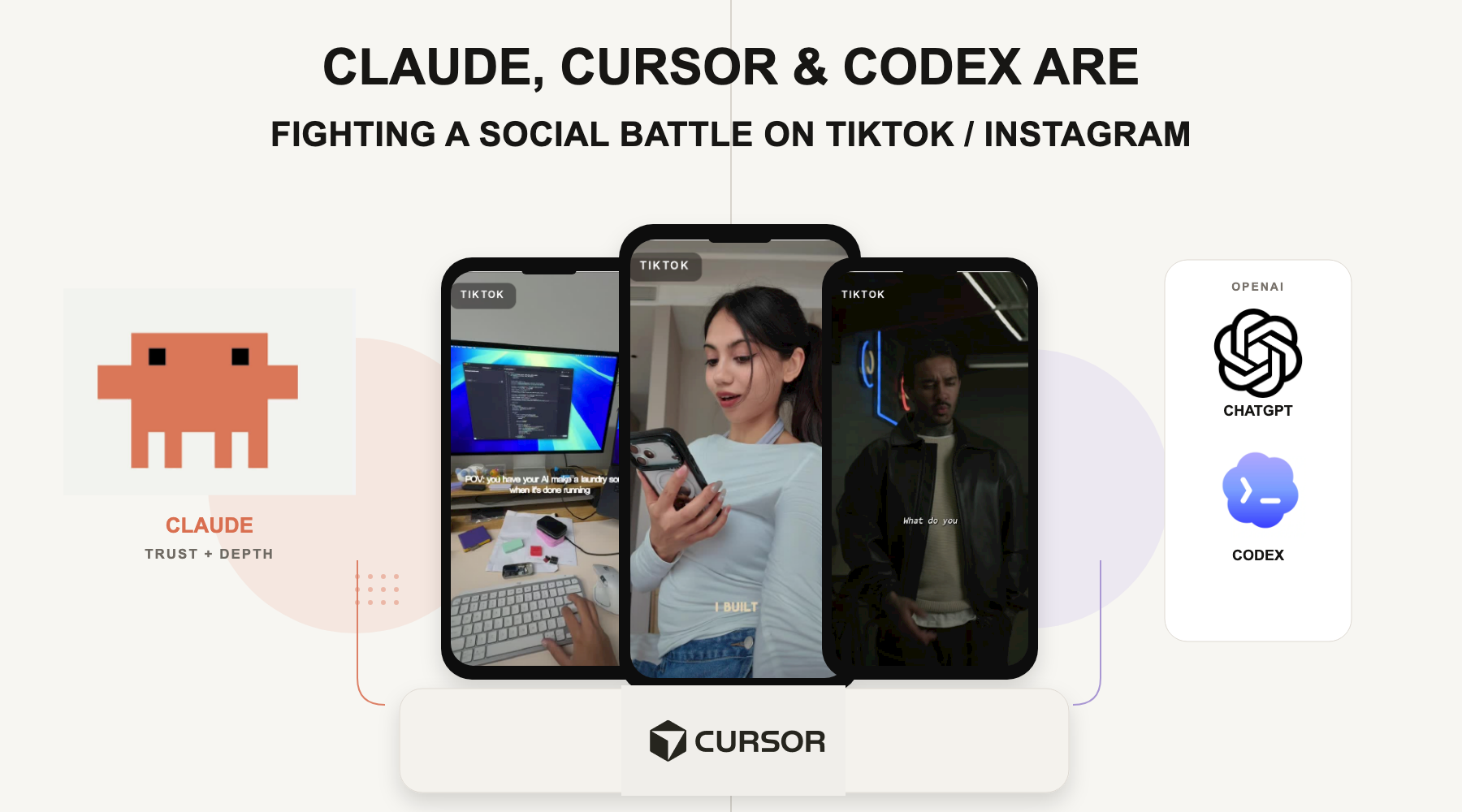
Over the last few years, AI startups like Gamma, Higgsfield AI, Wispr Flow, and Fish Audio have grown aggressively through creators and influencers.
So if you’re building a startup today, the obvious question is:
Is influencer marketing already saturated? Or should I still invest in it?
My 2 cents:
It still works. The lazy playbook is what’s saturated.
And there’s another strategy I think startups should pay much more attention to: UGC that doesn’t depend on a creator’s existing audience at all.
The distinction matters.
Influencer marketing helps you borrow distribution. UGC helps you build a creative engine you own.
The strongest strategy combines both.
I wouldn’t start with the biggest influencers
If you’re building an AI product, you’ve probably seen creators who have reviewed almost every tool in your category.
They can still generate reach. But for an early-stage startup, they’re rarely where I’d put my first dollar.
Gamma is a good example.
Cofounder Grant Lee has talked about focusing early on micro-influencers, personally onboarding them, brainstorming content angles with them, and making sure they deeply understood the product.
That approach makes a lot of sense to me.
I’d rather work with 10 smaller creators whose audiences closely match my ICP than one huge creator whose audience only vaguely overlaps.
Follower count is not the first question I’d ask.
The better questions are:
Do the right people trust this creator? Can they actually make good content? And can they make the product feel naturally relevant to their audience?
Followers help. Great content matters more.
This is especially true on TikTok, Instagram Reels, and YouTube Shorts.
Recommendation algorithms can push strong content far beyond an account’s existing followers.
I’ve seen this firsthand.
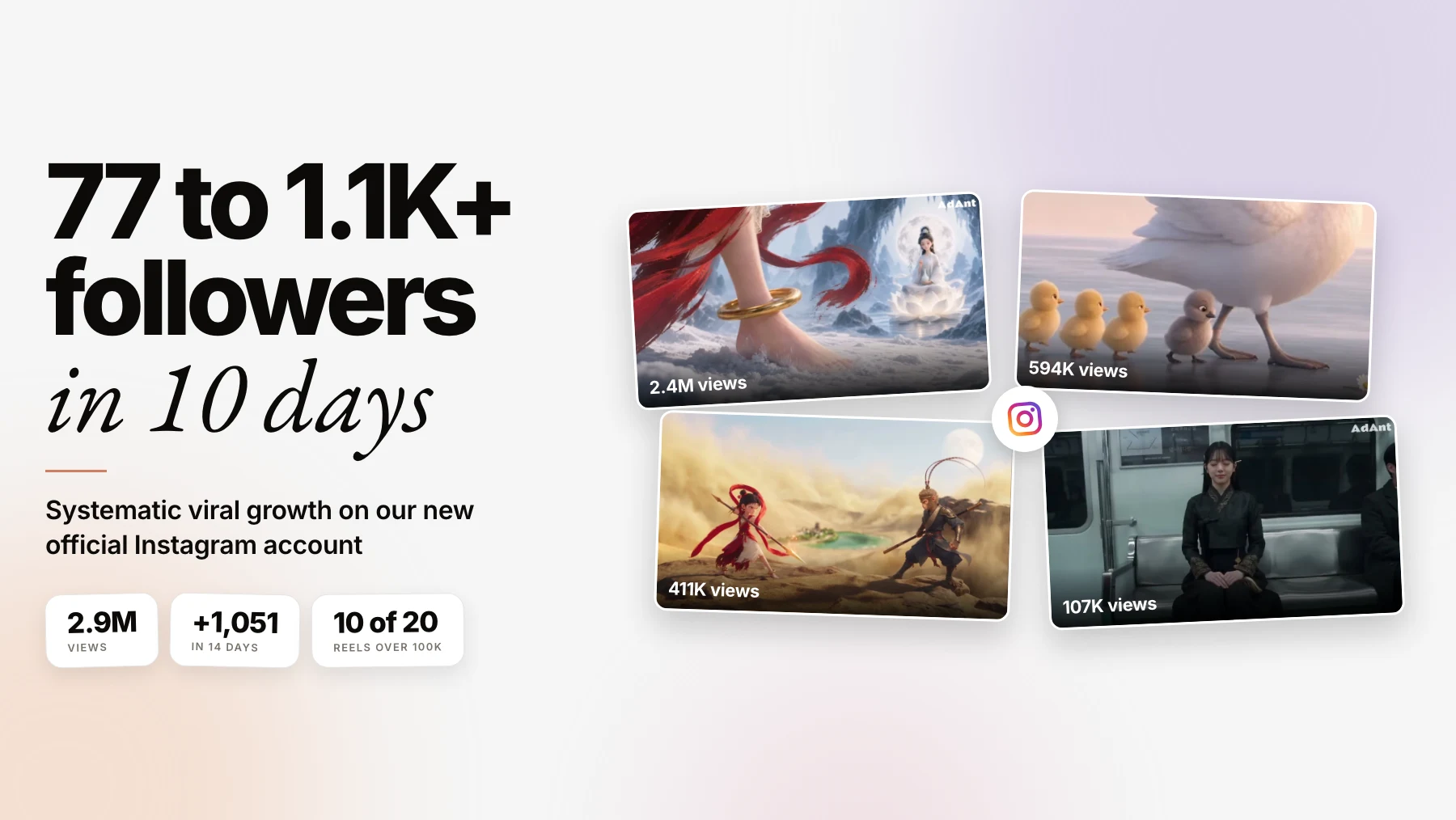
We’ve launched 10+ new accounts that reached 300K+ organic views, and sometimes millions, within their first 5 to 10 posts, starting with almost no audience.
Across our campaigns, content generated 50M+ organic views in six months, with individual videos reaching around 8M views.
Some of those organic winners later became paid ads and helped reduce CAC by as much as 60%.
That changed how I think about creator marketing.
Followers are a distribution advantage. Great content is a distribution engine.
Platform data points in the same direction.
TikTok’s creator campaign analysis found creator-led ads generated 70% higher CTR and 159% higher engagement than non-creator ads at the same CPM.
Meta reports that adding Partnership Ads to normal campaigns averages 19% lower CPA and 13% higher CTR.
And Emplifi’s 2026 benchmark found commerce experiences featuring customer UGC had substantially higher conversion and website visitation than those without it.
The exact definitions vary across these studies, but the broader pattern is useful:
Creator-style content can improve both attention and performance.
What the recent data says
| Format | Primary result | Supporting result | Scope |
|---|---|---|---|
| TikTok creator ads | +70% CTR | +159% engagement | Versus non-creator ads at the same CPM · Source |
| Meta Partnership Ads | −19% CPA | +13% CTR | Added to business-as-usual campaigns · Source |
| Customer UGC | 6.73× higher conversion rate | 4.11× higher website visits | Commerce experiences with vs. without customer UGC · Source |
Platform and vendor benchmarks; definitions differ by study.
This is where UGC gets interesting
Traditional influencer marketing works roughly like this:
Find someone who already owns attention → pay to access that attention.
UGC flips the model:
Find people who can create attention → test lots of creative → let the algorithm find the audience.
That is a very different growth system.
Cluely is an extreme example. Instead of depending on a handful of large influencers, it built a machine for producing huge volumes of short-form creator content.
Higgsfield has also experimented with performance-based creator programs.
In this model, the valuable asset isn’t necessarily the creator’s audience.
Sometimes, the creative itself is the asset.
Produce 20 concepts.
Find the two that outperform.
Create five variations of each.
Then put paid distribution behind the winners.
Suddenly, organic social is no longer just a brand channel.
It becomes your creative-testing lab for paid acquisition.
Viral UGC examples across niches
The format travels because the story does the selling. These report-backed examples use three different mechanics in three different categories—without needing polished brand creative.
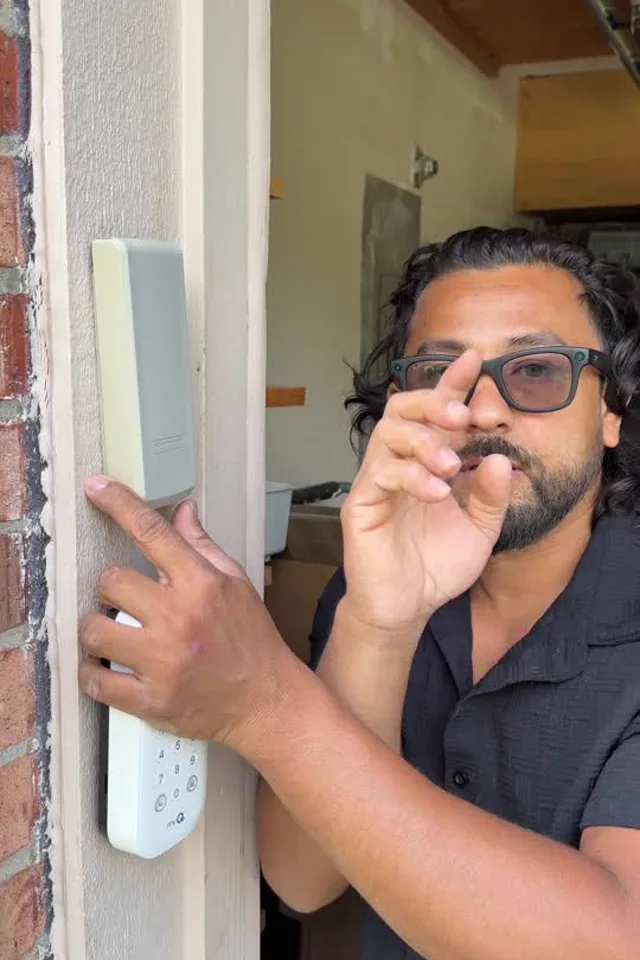 Smart-home product demo10M views · 11.3K followers at review · TikTok
 Healthcare workplace POV227.3K views · 10.7K followers at review · TikTok
 Experience POV3M views · 6.2K followers at review · TikTok
UGC and influencer marketing solve different problems
This is why I don’t think the question should be:
UGC or influencers?
They do different jobs.
Influencer marketing buys distribution.
It is powerful when you need immediate reach, credibility, a launch push, or quick access to a specific community.
UGC builds creative capability.
It is powerful when you need more content volume, faster experimentation, lower-cost creative testing, and a repeatable pipeline of assets you can eventually turn into paid ads.
But UGC has one major downside:
It takes patience.
Sometimes the fifth video works.
Sometimes it’s the fiftieth.
Producing more content does not automatically create better results.
Bad UGC at scale is still just scalable bad content.
You still need strong hooks, concepts, personas, pacing, product integration, and enough repetitions to understand why one video works while another dies.
My playbook for an early-stage startup
1. Use UGC as a creative-testing machine
I’d test aggressively across founder POVs, customer stories, tutorials, entertainment, before-and-after demos, human creators, avatars, and AI-assisted formats.
The initial goal wouldn’t be virality.
It would be learning.
Which hooks stop people?
Which personas feel credible?
Which pain points generate comments?
Which product moments make people want to know more?
Every piece of content should teach you something.
2. Work with micro and mid-sized influencers who deeply match your ICP
I’d study the creator’s actual content before looking at their follower count.
What happens when they publish sponsored posts?
Who comments?
Do those commenters look like potential buyers?
Have they promoted five of your competitors in the last month?
Could this person naturally use your product more than once?
The best creator partnership doesn’t feel like renting a billboard.
It feels like your product naturally belongs in that creator’s world.
3. Put paid distribution behind proven winners
When an organic creator video works, I wouldn’t stop at celebrating the views.
I’d ask:
Why did this work?
Then I’d create variations around the hook, format, persona, opening scene, and CTA.
And I’d test those versions as paid ads.
This is where UGC, influencer marketing, and performance marketing stop being separate channels.
They become one creative learning system.
The platform matters too
For TikTok, Instagram, and YouTube, I’d lean heavily toward:
UGC + micro-influencers + aggressive creative testing.
The recommendation algorithms give strong creative a chance to reach people far beyond the creator’s existing network.
For LinkedIn and X, I’d put relatively more weight on influencers, founders, and niche KOLs who already sit inside the target community.
The existing network matters more there.
A respected person in the right niche can give a piece of content the initial distribution and credibility it needs.
So the playbook should change depending on where you’re publishing.
But the principle stays the same:
Buy relevance before reach.
My two cents
Influencers help you borrow distribution now.
UGC helps you build a content engine you own.
Paid media helps you scale what already proved it can work.
For an early-stage startup, I wouldn’t choose just one.
I’d use UGC to discover what resonates, micro-influencers to reach the right communities, and paid distribution to scale the creative that earns it.
Because the real moat isn’t getting one big influencer to talk about your product once.
The moat is building a system that learns how to make your product worth talking about again and again.
Want a Social Content Strategy for Your Product?
We’re building social content research and strategist plugins for ChatGPT/Codex and Claude to help founders research competitors, discover winning formats, and turn them into content ideas for their own products.
You can also test the workflow directly at AdAnt.
Founder of AdAnt and author of The Social Signal, researching AI-powered creator marketing, organic social, and paid-ad creative systems.