

AI Zombie Short Drama:
Build Tension in a Train Scene
For an AI zombie short drama, establish a normal situation and a clear exit before introducing the threat. A train-set reference offers a useful confined location, but its public caption does not prove audience growth. Develop a new escalation with readable geography, consistent characters and a reveal that answers the opening question.
What does the train reference establish?
The reference frame shows a dark-haired woman seated on a train; the public post is tagged with K-drama and zombie themes.
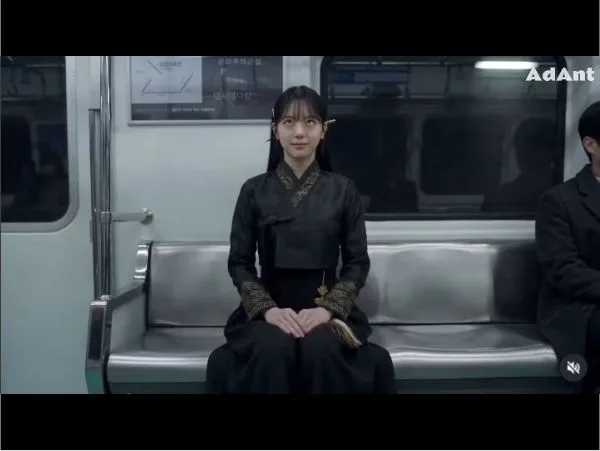
Watch the train-set Reel on Instagram.
The train gives an audience an understandable enclosure: seats, doors, windows and a narrow route through the carriage. Our production analysis is that this setting can support suspense without requiring an explanation of a whole fictional world. That is a recommendation about staging, not a claim that this single post proves a successful format. A genre label in a caption identifies how a creator presents the work; it does not establish a model, prompt, budget, retention curve or follower result.
The still should also be read honestly. It supplies a setting and a character, not proof of every later action. The storyboard below is an original proposal for that type of location. It is not a reconstruction of scenes we cannot establish from the captured reference.
Use the carriage geography to build suspense
Before planning a chase, draw where the protagonist sits, where the exit is and where the danger could enter. The audience should be able to predict a route. Suspense becomes harder to follow when a door changes sides or a character jumps across the carriage between shots. Use background passengers selectively: they can establish normality, but too many independent movements create extra continuity to inspect.
| Beat to plan | Information the viewer needs | Production check |
|---|---|---|
| Normal journey | Who to follow and where they are | Stable face, clothing and seat position |
| Disturbance | What changed in the environment | A specific sound or visible reaction |
| Recognition | Why the disturbance matters | Eyeline connects the character to the threat |
| Choice | Which escape route remains | Door and aisle positions match earlier shots |
This structure is a proposed way to design the scene. It does not require graphic injury or a recognizable television character. An original protagonist and a distinct visual treatment make the production easier to describe accurately. For the broader workflow and model considerations, see the AI zombie video guide.
An original storyboard: the reflection moves first
Start with a commuter seated beside a dark window. The carriage looks ordinary. A reflection behind the commuter makes a movement that the visible passenger does not. The commuter notices, glances toward the aisle and discovers that the nearest exit is beyond that passenger. Finish on a deliberate choice to move toward the connecting door. This proposal builds an unresolved danger without promising an entire episode in one generation.
Prepare a still that locks the commuter, window and seat arrangement. Generate the reflection cue and the reaction as separate shots so each has a clear job. Review whether the reflection belongs to the correct person, whether it mirrors the environment consistently and whether the reaction follows the cue. Reject a take that is visually polished but makes the clue impossible to understand. Place sound and captions after the geography reads clearly.
Use the AI Short Drama Generator to develop your own scene brief, and inspect the estimate before generation. Neither the public reference nor the proposed storyboard establishes the actual cost or model needed for an acceptable result.
How should a short-drama experiment be evaluated?
Ask whether the opening creates a question the ending addresses. Watch for a retention drop while the setting is still being explained, then for a drop when the threat appears. Those observations can suggest different changes: shorten orientation when viewers leave before the clue; clarify the clue when viewers leave at recognition. They do not by themselves prove causation, especially if the audience or distribution differs between posts.
For a series, define what the next episode offers before adding a follow request. A coherent promise might be the next decision in the same carriage or a recurring protagonist facing a new enclosed-space dilemma. Record follows and profile visits from your own account analytics where available; do not infer them from likes. The reference here is included as a genre and staging example, not labeled a verified viral success. Compare its suspense structure with the immediate payoff in the dialogue skit example before deciding which format fits your account.
Frequently asked questions
Does a zombie Reel need graphic violence?
No. A mismatch, an unexplained movement or a blocked exit can create a question without graphic imagery. Choose a treatment that fits the intended audience.
Is the storyboard the original source prompt?
No. The reflection sequence is an original proposal. The public source does not establish the original prompt, model or production cost.
Does this example prove a zombie series will go viral?
No. It illustrates a setting and genre. Reach, retention and follower conversion need to be evaluated from your own account data.