

AI Skit and Meme Example:
Set Up the Reaction
An AI dialogue skit needs a readable setup, a reversal and a reaction that lands after the line. This example pairs a book-reading man with a pink-haired woman and visible dialogue captions. Study timing and speaker clarity, then write a different premise; the public post cannot establish generation cost or follower conversion.
What is visible in the dialogue example?
The reference frame shows a book-reading man facing a pink-haired woman, with dialogue captions beneath them. The creator's caption attributes the clip to AdAnt and Seedance 2.5; that is a creator statement, not an independently verified generation record.
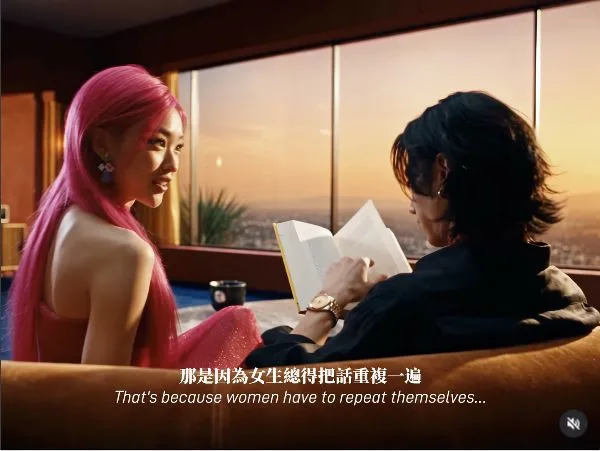
Watch the original dialogue skit on Instagram.
The book is a useful prop because it gives the scene an immediate activity. The characters are not simply waiting to deliver lines. Their opposing positions make the exchange readable, and captions expose the dialogue even in a still. Our interpretation is that these are practical staging choices to study. We are not claiming that the prop, model or caption style caused the public response.
A source attribution should not become an invented production recipe. The public post does not provide the complete prompt, number of retries, voice workflow or total cost. If you reproduce a technique in your own workflow, record those details from your own run before publishing a comparison.
Design the setup and reaction as separate jobs
A joke can fail even when the speech sounds natural. The setup may take too long, the punchline may be unclear or the reaction may appear before the line that motivates it. Write the exchange without any animation first. Ask a reader to identify the assumption in the setup and what changes at the end. If the reversal depends on a paragraph of explanation, simplify the premise.
| Element | Job in the skit | Review question |
|---|---|---|
| Prop or activity | Establish what the speaker is doing | Is it recognizable immediately? |
| Setup line | Create one expectation | Can it be understood without backstory? |
| Reply | Change that expectation | Is the contradiction clear? |
| Reaction | Let the audience register the change | Does it follow the reply rather than anticipate it? |
Keep the speakers' screen positions consistent so captions and eyelines refer to the same person. Use subtitles to make the exchange legible, not to add a different joke that competes with the performance. The related visual comedy example offers a contrast: its premise can be expressed through an exaggerated action rather than an exchange of lines.
An original skit: the productivity expert on a break
Proposed scene: someone is reading a book about getting things done while a partner points to an unfinished household task. The reader announces a new system. The reply reveals that designing the system has replaced doing the task. Finish with a quiet reaction and the untouched task still visible. This is a fresh premise for development, not a transcription of the source joke or its original prompt.
Choose a simple setting with room for both faces and the relevant prop. Build the setup, reply and reaction as distinct beats. If generating separate shots, preserve clothing, lighting, room layout and which hand holds the book. Check lip movement against each speaker's audio and inspect whether the open pages or fingers distort during the turn. Add captions from the final dialogue so they match the finished cut.
The AI Skit Generator provides a starting point for a scene brief. Confirm the actual generation estimate and review the output before publishing. A model attribution in somebody else's caption is not a price quote or a guarantee of the same performance.
What would make the skit a useful recurring format?
Decide whether people should return for a character, a recurring conflict or a specific kind of joke. A generic collection of unrelated punchlines offers a different account promise from a recognizable couple with ongoing disagreements. Make that promise visible in the profile and in adjacent posts. The couple-animation case guide explores how recurring characters can anchor changing situations.
For a practical experiment, compare alternate openings for the same premise rather than changing the cast, joke and visual style at once. Record retention before and after the reply, replay behavior where available, sharing, profile visits and follows. A reaction that attracts comments is not necessarily a reason to follow; inspect those outcomes separately. Use consistent observation windows and note audience differences. These are suggested measurements for your own account, not results established by the reference post.
Frequently asked questions
Is Seedance verified as the model used?
The creator attributes the clip to Seedance 2.5 in the public caption. We have not independently verified the generation record.
Should captions repeat the spoken dialogue?
Use captions that match the final dialogue and remain readable. Do not rely on tiny text or let captions cover the facial reaction that carries the joke.
Can a public skit reveal the generation cost?
No. The number of attempts, editing work and settings are unknown. Use the estimate and actual charges from your own production.