

AI Cat Animation Examples:
Pet Logic Makes the Joke
Cat animation becomes easier to follow when a familiar household situation meets a clearly different feline agenda. A suspicious cat at a plate and a cat beside a sleeping couple offer distinct setups. Study eyelines, scale and reactions, then test an original scene rather than copying the reference or assuming it guarantees reach.
What do these cat examples actually show?
One reference shows a gray cat beside a man and an empty plate; the caption describes a cat needing a pill. The other shows a cat facing a sleeping couple in bed, with a caption about a family of three.
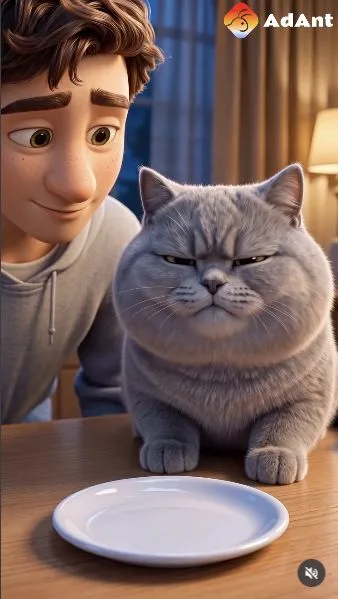
Watch the pill-time example on Instagram.
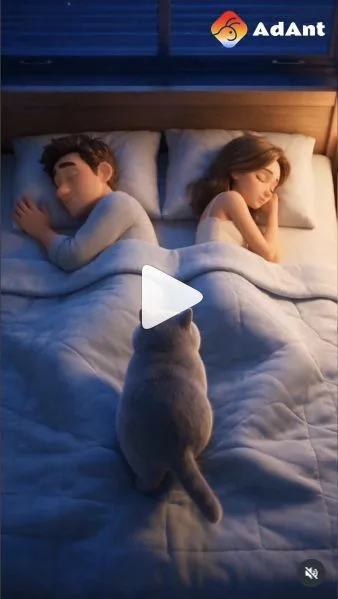
Watch the bedtime example on Instagram.
The cat's expression in the plate scene establishes resistance without requiring a long explanation. The bed scene instead creates a question of territory: there is already a settled arrangement, and the cat arrives with its own priorities. That distinction is our creative reading of the visible setups. It is not evidence about the original prompts, the complete production process or follower conversion. The pill reference is a fictional comedy setup, not veterinary guidance; do not turn the scene into instructions for medicating a real pet.
Choose the cat's goal before choosing a visual style
A fluffy render can hold visual interest, but the conflict should survive as a simple sketch. Decide what the human wants, what the cat wants and which object makes their goals collide. A plate suggests negotiation around food; a pillow suggests ownership of a sleeping spot. If the viewer cannot identify the object or the cat's attention, adding more animation may make the setup less clear.
| Scene element | Plate setup | Bedtime setup |
|---|---|---|
| Human intention to explore | Offer something to the pet | Sleep without interruption |
| Cat intention to explore | Inspect before trusting | Choose the preferred place |
| Essential visual cue | Eyes alternating between owner and plate | Cat's path toward the occupied space |
| Common production mistake | Paw, plate and hand merging | Cat changing scale between shots |
These intentions are suggested development angles, not a claim that we know the creator's plan. For a recurring series, keep the cat's temperament stable while changing the household obstacle. The audience should recognize a personality, not just the same fur color. The couple-animation examples show how a shared domestic setting can support a different kind of emotional conflict.
An original storyboard: the forbidden keyboard
Try a new scenario: an owner is typing, while a gray cat wants the warm keyboard. Establish the desk, laptop and cat in one readable composition. The owner moves a soft cushion closer as an alternative. Show the cat evaluating it, then choosing the keyboard anyway. End on the owner's interrupted expression and the cat settling comfortably. This is a proposed story, not the source clip's prompt or a measured winning format.
Use a consistent reference for the cat and fix the laptop's location across shots. Describe the cat's approach and final resting position separately. Avoid asking the generator to produce legible screen text while also animating paws over the keyboard; keep the screen simple and add any essential text afterward. Review weight and contact: the cat should sit on a surface rather than float through it, and the owner's hands should remain distinct from the paws.
The Viral Animation Generator can be the entry point for an original pet-comedy brief. Check the displayed cost before generating. No cost estimate for the reference clips can be inferred from how short or simple they look.
Measure whether the cat is the reason people return
Compare a stable cast across different household situations. A pet account and a general animation showcase may attract different audiences, so document the account promise as well as each episode. Use your own Insights to inspect where viewers leave: before the cat's goal is clear, during a long setup or after the payoff. Then examine sharing and follower conversion separately. A joke that people send to another cat owner can be useful even when it does not make them follow a general-purpose account.
Change one storytelling variable per comparison where practical: the opening reaction, the obstacle or the ending. Keep the observation window consistent and record differences in distribution rather than calling a casual comparison a controlled experiment. The public posts here supply concrete creative references; they do not provide verified retention, attributed follows or production ledgers. Use the Reels follower diagnosis to connect your own measurements to an account-level decision.
Frequently asked questions
Do I need dialogue for cat animation?
Not necessarily. An obvious goal, an expressive reaction and readable staging can establish the conflict without dialogue. Test whether the scene still makes sense with sound off.
Can these examples establish a cost per clip?
No. Their prompts, retries and generation settings are not available. Use the actual estimate for your own production brief.
What should stay consistent across a cat series?
Keep the cat’s appearance and temperament recognizable. Change the household conflict, and review scale, paw contact and eyelines between shots.