

AI Couple Animation:
Two Bunny Reels, Different Emotions
Build a couple animation around a recognizable disagreement or gesture, then let expressions and body language resolve it. These bunny Reels offer different starting points: affection despite discomfort, and closeness after an argument. Use them to study character continuity and emotional contrast, without treating public posts as proof of follower growth.
What can these bunny-couple examples teach you?
The first example shows a sweating bunny beside a resting partner in bed. Its caption frames the situation as affection despite discomfort. The second shows the same kind of domestic setting with a visibly unhappy partner; its caption describes meeting each other halfway after an argument.
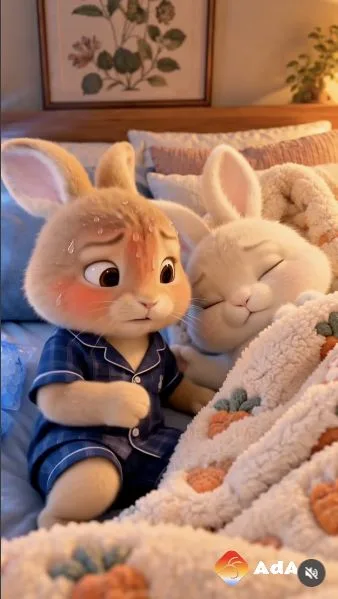
Watch the affection example on Instagram.
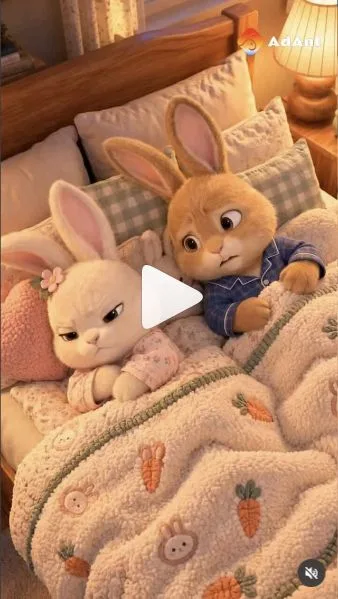
Watch the reconciliation example on Instagram.
Our reading is that the setting does useful work: viewers can recognize an intimate relationship before any exposition. A worried face beside a relaxed face establishes a contrast. The point to borrow is that contrast, not the exact characters or a promise that a similar scene will spread. The frames and public captions are observable evidence; the interpretation of why the scene is readable is our editorial analysis. Production prompts, generation costs and post-attributed follows are not established by these public posts.
Which relationship moment should become a repeatable series?
Start with a situation your intended audience can name without needing a plot summary. A tiny inconvenience, an unspoken apology and an unwanted interruption are different premises, even if they share a bedroom set. Keep the recurring relationship recognizable while changing the disagreement. If every episode merely replaces a prop, the audience has little reason to expect a new story.
| Creative choice | Affection despite discomfort | Reconciliation after an argument |
|---|---|---|
| Emotional question to explore | Will comfort or closeness win? | Who makes the first small gesture? |
| Useful facial contrast | Strain beside contentment | Defensiveness beside hesitation |
| Proposed payoff | An accommodation that preserves affection | A gesture accepted without a speech |
| Continuity to protect | Pajamas, fur markings, sleeping positions | Eyelines, distance, the shared blanket |
Those payoffs are proposed directions, not descriptions of unseen moments in the reference clips. Choose one emotional question per episode. A creator can test whether the characters remain interesting across different situations before investing in a longer serial story. For another domestic format with a different central relationship, compare the cat animation examples.
A new storyboard: a bedtime lamp disagreement
This is an original production brief, not a recovered prompt from either Reel. A brown bunny wants to finish a book; a white bunny wants the bedside lamp off. Open wide enough to establish the shared bed and the lamp. Cut closer when the tired partner reaches toward the switch. Hold the reader's guilty reaction long enough to make the disagreement legible. End with a small reading light under the blanket and both partners comfortable.
Create a character reference first, with stable clothing, fur colors and proportions. Describe each shot's starting pose and intended ending pose, rather than asking a single generation to improvise the whole emotional arc. Keep the lamp on the same side and preserve which partner occupies which side of the frame. During review, check that the reaching paw belongs to the right character and that the reaction follows the gesture.
The Viral Animation Generator is a place to develop a new brief. Review the actual generation estimate before running it; these references do not establish what a remake will cost. Use a restrained caption that supports the scene instead of explaining every expression.
How would you test whether the series earns followers?
Separate a scene's ability to attract attention from the audience's reason to return. A useful test holds the cast and account positioning steady while changing the opening disagreement. Record the opening, caption, length, publication time and observation window. Compare retention around the first gesture, shares, profile visits and follows when your own Insights makes them available. Compare similar posts over the same elapsed period, not an older successful post against a newly published one.
A high view count alone cannot tell you whether viewers want more of the couple. Look for the relationship between profile visits and follows, and whether comments recognize the characters rather than only the isolated joke. These are diagnostic questions, not a universal benchmark or proof of causation. Our Reels views but no followers case study explains why reach and follower growth can diverge. These newer source posts provide additional creative examples; they are not new follower-growth measurements.
Frequently asked questions
Do these examples prove bunny videos grow an account?
No. Public source posts show creative choices, not post-attributed follows. Compare follower conversion in your own Insights before calling a format a growth driver.
Should every episode use the same setting?
Keep enough visual continuity to recognize the couple, but change the situation. A repeatable relationship matters more than an identical background.
Are these the original generation prompts?
No. The lamp disagreement is a proposed storyboard. Original prompts and generation costs are not available from the public examples.