
About this skill
Pixel art only looks right when every pixel stays square. This skill draws each frame on a small screen, such as 320x180, that holds palette colours and nothing else: no blending, no gradients, no positions between pixels. Sprites, animations and tile maps are written as text, one character per pixel, so the agent can draw, read and fix them. Light and dusk come from ordered dither and colour swaps, the camera snaps to whole pixels, and characters step at 8 to 12 frames a second. A small synth plays the score on pulse, triangle and noise channels, written as rows of notes on the film's beat grid. The renderer draws every frame in headless Chromium, enlarges it by a whole number with nearest-neighbour before encoding, and adds the music. A checker then fails a video with uneven scaling, colours off the palette, blurred edges or colour bleeding across pixel edges, and one whose frames or sound no longer match the render.
You say
Using this skill, make a 20-second pixel-art short for our launch: a small robot gardener waters a seedling on a rooftop at sunset until it blooms in our brand colours, #ff6b35 and #2ec4b6. Vertical 1080x1920, a cheerful chiptune, and check that the pixels stay crisp.
How it works
- Tell your agent the story in a few beats, the length, the frame and the mood of the music.
- It sets up a film folder, draws the characters and tiles as text, and looks at them enlarged before they move.
- It writes the scene as a function of time on a small screen of palette colours, and the score as rows of notes on the same beat grid.
- The renderer draws every frame in headless Chromium, enlarges it by a whole number, adds the music, and runs the pixel check on the MP4.
Getting a good result
- Pick the main character's height in pixels first, then size the world around it.
- Let a character change drawing 8 to 12 times a second while it glides on every frame. The motion reads as hand-timed, not floaty.
- Upload at 1080p. Platforms re-encode every video, and big pixel blocks survive it where small ones blur.
What you get
- An engine that draws on a small screen of palette colours, with whole-pixel drawing, ordered dither and light by colour swaps
- A text format for sprites, animations and tile maps, and a script that shows every frame enlarged
- Four original palettes, an original pixel font, a starter scene and a complete 16-second example film
- A chiptune synth with pulse, triangle and noise channels, and a tracker-like score format
- A renderer that scales by whole numbers before encoding, and a checker that fails blur, off-palette colours and uneven scaling
Good fit
- Story ads, launch teasers and intros with the feel of a 16-bit game
- Vertical clips for Reels, Shorts and TikTok in a look that stands out in the feed
- Checking any pixel-art video for blur and colour bleed before you post it
Not for
- Playable games: this makes a film to watch, not a game to play
- Smooth vector or 3D animation, which JavaScript Animation and Three.js Animation cover
- Recreating an existing game's characters, sprites, look or music
How to install it
- Download the ZIP and unzip it.
- Move the folder holding
SKILL.mdinto your agent's skills folder, such as~/.claude/skills/for Claude Code. - Start a new session and ask for what you want to make.
Needs: An agent that reads skills, Node.js 22 or later, Playwright with Chromium, ffmpeg.
Popular on X
Posts showing demand for this kind of video. Unless a post names this tool, it wasn't made with it.
- An animated pixel-art scene coded with Opus 5.5 462,178 views on X, measured 11 November 2026
- A short film made in code with Opus 5.5, its objects drawn as pixel art 13,459 views on X, measured 11 November 2026
- A pixel game coded with Opus 5.5, with no sprite images 8,590 views on X, measured 11 November 2026
FAQ
What does it cost?
$2.99 once for this skill, or $99 once for every skill in the library. It also comes with every paid AdAnt plan, from $15 a month. It runs on your own computer and uses no AdAnt credits.
Can I use it in commercial work?
Yes. The skill's code is MIT licensed: use it and what it makes in your own commercial work, including for clients, and keep the license file with any copy you pass on.
Why does pixel art usually go blurry in a video?
Three things blur it: drawing at a position between pixels, enlarging the small frame with a smooth filter, and the colour compression in normal video files, which shares colour across 2x2 pixel blocks. This skill rounds every position, enlarges each frame itself with nearest-neighbour before encoding, and uses an even scale so the shared colour blocks sit inside one pixel. The checker measures the finished video and fails it if any of these slipped.
How is this different from JavaScript Animation and Lemo-Opuscar?
JavaScript Animation draws smooth vector shapes on a full-size canvas. Lemo-Opuscar has a 16-bit role-playing-game style among its 66: a style prompt and one demo film whose code your agent can learn from, with no shared engine, sprite format or pixel checker. This skill ships the pixel engine, the sprite, tile and score formats, palettes, a font and a checker, so each film starts from tested parts and ends with a measured result.
Can I use my brand colours?
Yes. A palette is a short JSON file of named colours. Add your brand colours as accents to a bundled palette, or build a new one of 8 to 32 colours; the guide in the ZIP explains how to make ramps that shade well.
Who owns the music and the art?
You do. The synth plays the score your agent writes, note by note, with no samples. The example film's characters, palettes, font and score were made by AdAnt for this skill and are MIT licensed, like the code.
Did the creators of the pixel-art posts write this skill?
No. The idea comes from popular posts linked on this page, in which an agent coded animated pixel-art scenes. AdAnt wrote this skill, its engine, its example film and its music from scratch, and those creators did not write or review it. The clip on this page was rendered by AdAnt with this skill.
Related skills
Shader Loop Backgrounds
Have your agent write animated WebGL backgrounds that loop with no seam, then ship each as a React component, an MP4 for your ads and a still.
Dither & Glyph Hero
Have your agent build a hero that draws a live 3D scene in two inks, as dither, scanlines or glyphs, around an AI prompt, then check it in Chrome.
Logo Reveal and Ident
Have your agent turn your SVG logo into a 3 to 8 second reveal with a sound hit, as wide, vertical, square and transparent videos that end on your logo, checked against the SVG.
Browser Game Trailer
Have your agent build a small game that plays in a browser tab, then play it with scripted inputs and cut a 15 to 30 second gameplay trailer from its best moments.
Vertical Ad Motion Graphics
Direct and build a 9:16 motion graphics ad that works on mute, with no footage.

Code-Rendered 3D Animated Short
Have your agent write a tiny wordless story, build its characters and set in three.js, shoot it from a shot list, score it and render a frame-exact MP4.
UI Morph Loop
Have your agent make a looping clip where one element turns into a button, toggle, slider, search field, notification and player, with a cursor that clicks and drags to cause each change.
Sketch to Styled 3D Scene
Have your agent read a hand sketch of a place into a measured layout, build it in three.js, and show the same scene in sunlit, painted and night looks.
Procedural Character Performance
Animate an original character dancing, walking or trotting to a beat entirely in code, with feet that never slide and every hit on the beat.
JavaScript Animation: Every Frame Drawn in Code
Have your agent draw a short film on an HTML canvas, write its music in code, and render an MP4 with no assets.
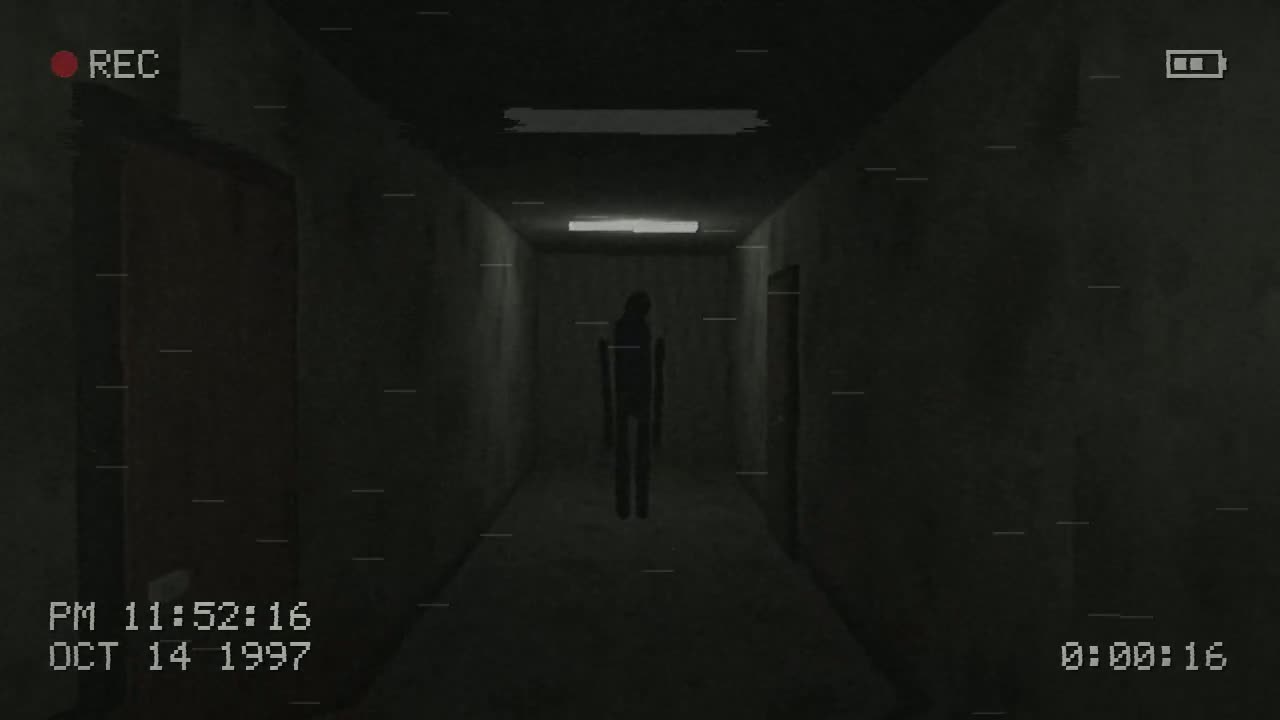
Analog Horror Short
Have your agent make a 20 to 60 second found-footage horror short entirely in code, with a handheld camera, worn VHS tape, dread sound and a safety check.
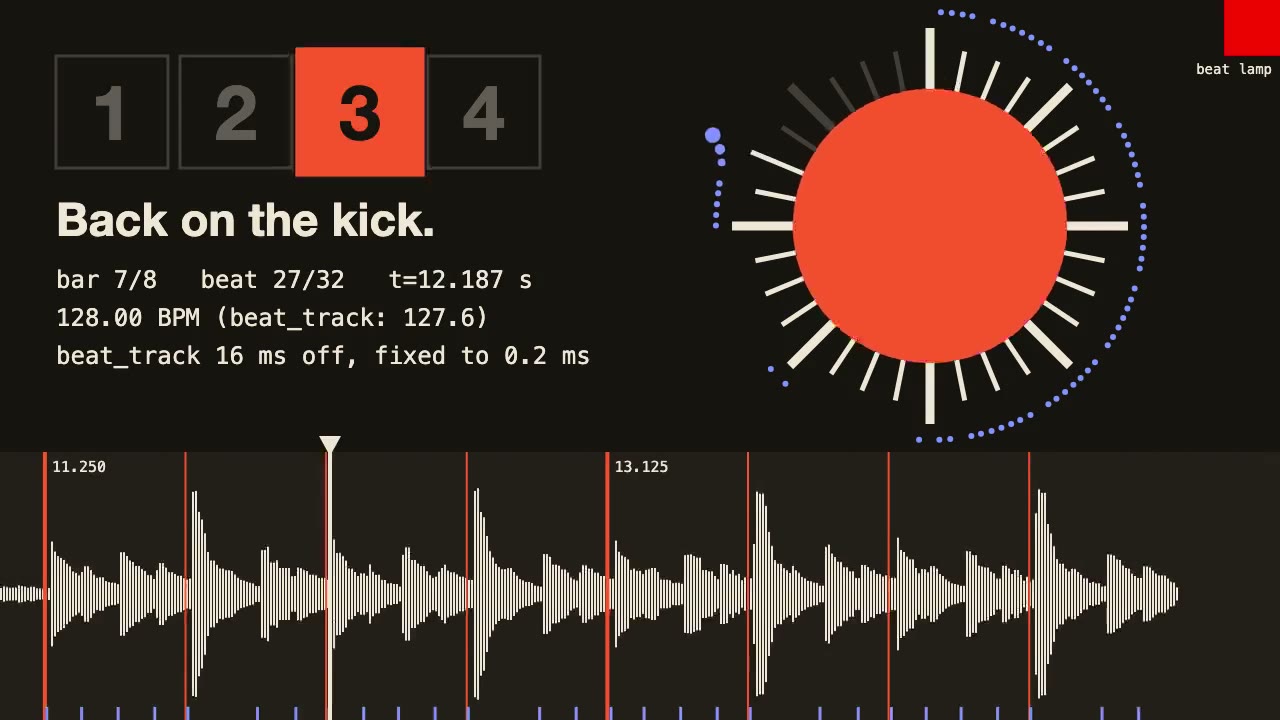
librosa Beat Sync
Measure a track's beats with librosa, drive an animation from the JSON it writes, and prove the sync by measuring the video.