
About this skill
Your agent runs librosa on a track, fixes what its beat tracker gets wrong, and writes the beats and onsets to a JSON file that an animation reads, so no timing is typed in by hand. After the encode, a script decodes the MP4 and compares the frame of each visual hit with its beat and with the kick in the audio. It also repeats the test with the sound moved 50 ms, to show that the measure can fail. The example is complete: a numpy-made track, the analysis, a Canvas page and the check.
You say
Measure the beats in track.wav, make a 15-second animation that hits on every beat and shows the beat grid, and prove the sync from the finished MP4.
How it works
- Your agent asks, then installs librosa 1.0.0 in a project folder and runs the example once.
- It analyzes your track, fixes the phase and tempo against the low end, and writes beats.json.
- Your animation reads that file and renders frame by frame, so each hit lands on its nearest frame.
- A script decodes the finished MP4 and measures each hit against its beat and its sound.
Getting a good result
- Analyze the music alone, before a voice goes on top. Speech adds onsets of its own.
- Analyze again after any change to the mix. Moving a few levels moved the tracker half a beat in our test.
- Clips often autoplay muted, so show the waveform and grid. Then people can see the sync without sound.
What you get
- An analysis script that writes beats, onsets, a loudness curve and a waveform to one JSON file
- A fix for four things the plain beat tracker got wrong on our test track: phase, lateness, rounded tempo and a dropped first beat
- A Canvas page with a pure renderAt(t) that reads only that JSON
- A check that measures each visual hit in the encoded MP4, with a control that has to fail
- A track synthesized with numpy, with planted kicks to score against
Good fit
- Motion graphics, lyric videos and ads that have to land on the music
- Any renderer that can read a JSON file: Canvas, Remotion, Three.js, Manim or Blender
- Anyone who wants the sync measured, not only felt
Not for
- Finding downbeats or the time signature: librosa finds beats, not bars, so you tell it which beat is the 1
- Rubato or drumless music without checking every beat by eye
- Judging whether the music is good
How to install it
- Download the ZIP and unzip it.
- Move the librosa-beat-sync folder into your agent's skills folder, such as ~/.claude/skills/. Your agent asks before it installs librosa in a project folder.
- Start a new session and ask for what you want to make.
Needs: An agent that reads skills, uv and ffmpeg, Node.js 22 or later and Chrome, for the example page.
FAQ
What does it cost?
$2.99 once for this skill, or $99 once for every skill in the library. It also comes with every paid AdAnt plan, from $15 a month. It runs on your own computer and uses no AdAnt credits. librosa is free, is not in the ZIP, and runs on your own machine with no key or account.
Can I use it in commercial work?
Yes. You can use the skill and what it makes in your own commercial work, including for clients. You can't resell the skill.
What does setup download and run?
After asking, it installs librosa 1.0.0 and its dependencies, such as NumPy, SciPy and scikit-learn, from PyPI into a project folder: about 280 MB. It needs no model. The example page runs in your own Chrome, served only on 127.0.0.1.
Can I use it commercially?
librosa is under the ISC license, a short permissive license that allows commercial use as long as the notice stays with copies of it. The bundled example scripts carry no third-party code. You still need the rights to any music you analyze and publish. Measuring a song doesn't give you a license to it.
What did AdAnt run, and what didn't it?
We ran the whole example on librosa 1.0.0 on an Apple M4 Mac by following the skill in a clean folder, and a second clean run gave a byte-identical MP4. The clip is that run, with its own synthesized track. The grid landed within 0.7 ms of the planted kicks, and in the MP4 each flash was within 16.1 ms of its kick. That track is synthetic with a clean kick, so a real mix will do worse. We also tried a tempo ramp, which lost its first beat. We didn't test it on commercial music or rubato playing.
Why does the clip have a lamp in the corner?
The check reads it. The lamp turns red on the frame a beat lands, so a script can find that frame in the encoded file. Clips on this page play muted by default, so the scrolling waveform and grid show the same thing by eye: each kick spike meets the playhead as the disc stamps. Unmute it to hear the track.
Related skills
WhisperX Word Captions
Get a timestamp for every spoken word on a plain CPU, export SRT and VTT, and drive word-highlighted captions from the JSON.
LosslessCut Trims
Cut long recordings fast without re-encoding, and measure where each cut really landed.
Tweakpane Live Tuning
Add a live panel to an animation so you can tune it by hand, then write the values you chose back to the code.
Remotion Video
Make video as React components, where every frame comes from the frame number, and render one template for any data.
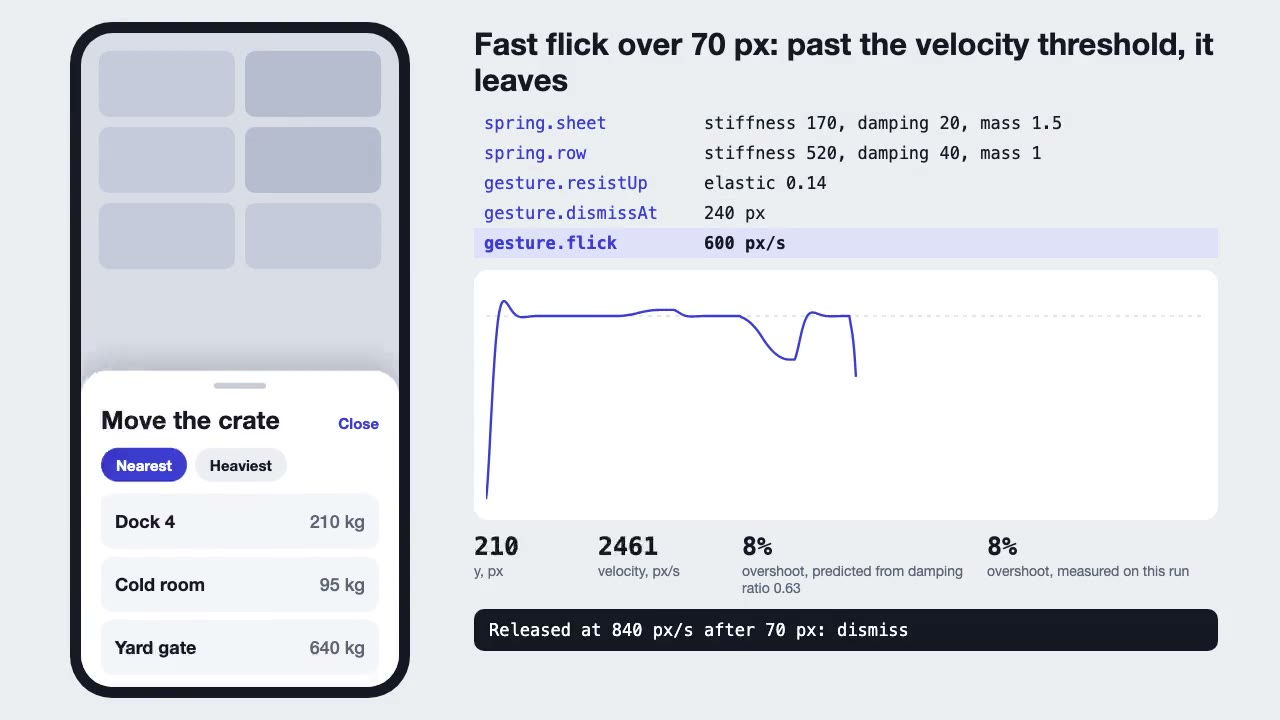
Motion UI Animation
Build UI animation with springs, layout transitions and gestures from one written motion language, with a linter that catches drift.
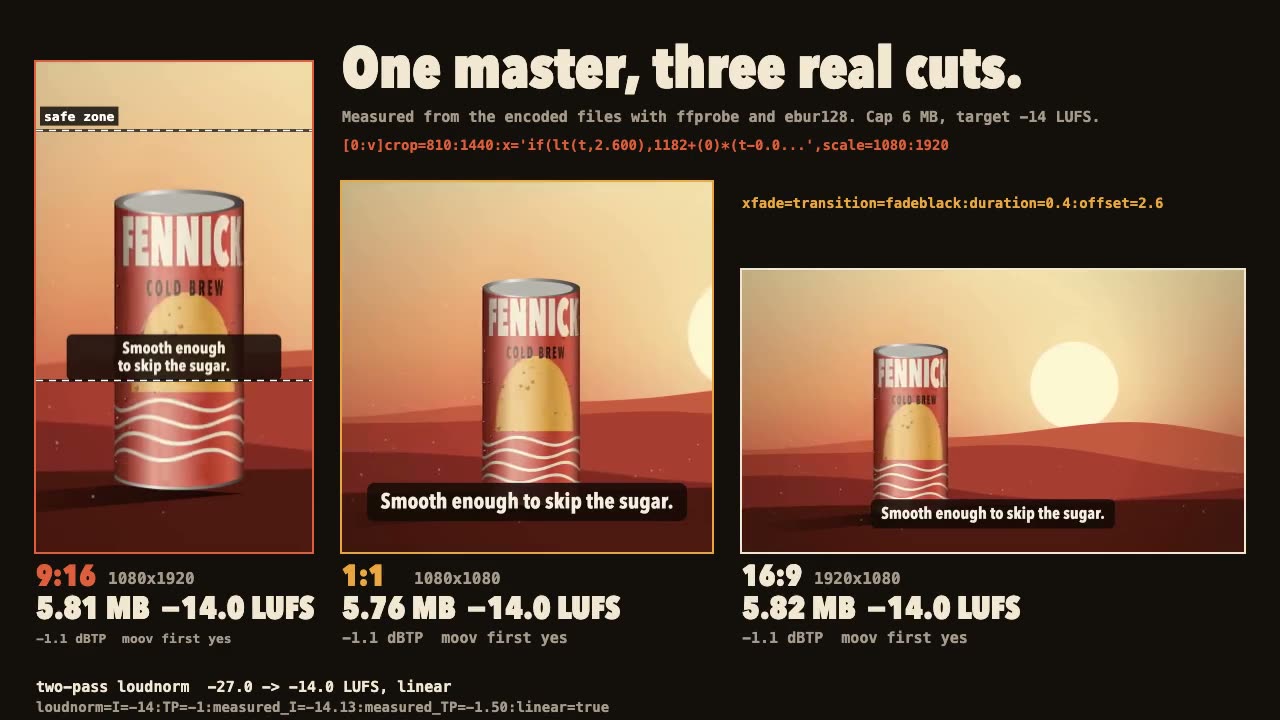
FFmpeg Finishing
Turn one master into 9:16, 1:1 and 16:9 files with safe-zone captions, measured loudness and a size cap.

three.quarks VFX
Make trails, sparks, shockwaves and fireworks in three.js, on a seeded clock, so a frame renders the same again on the same machine.
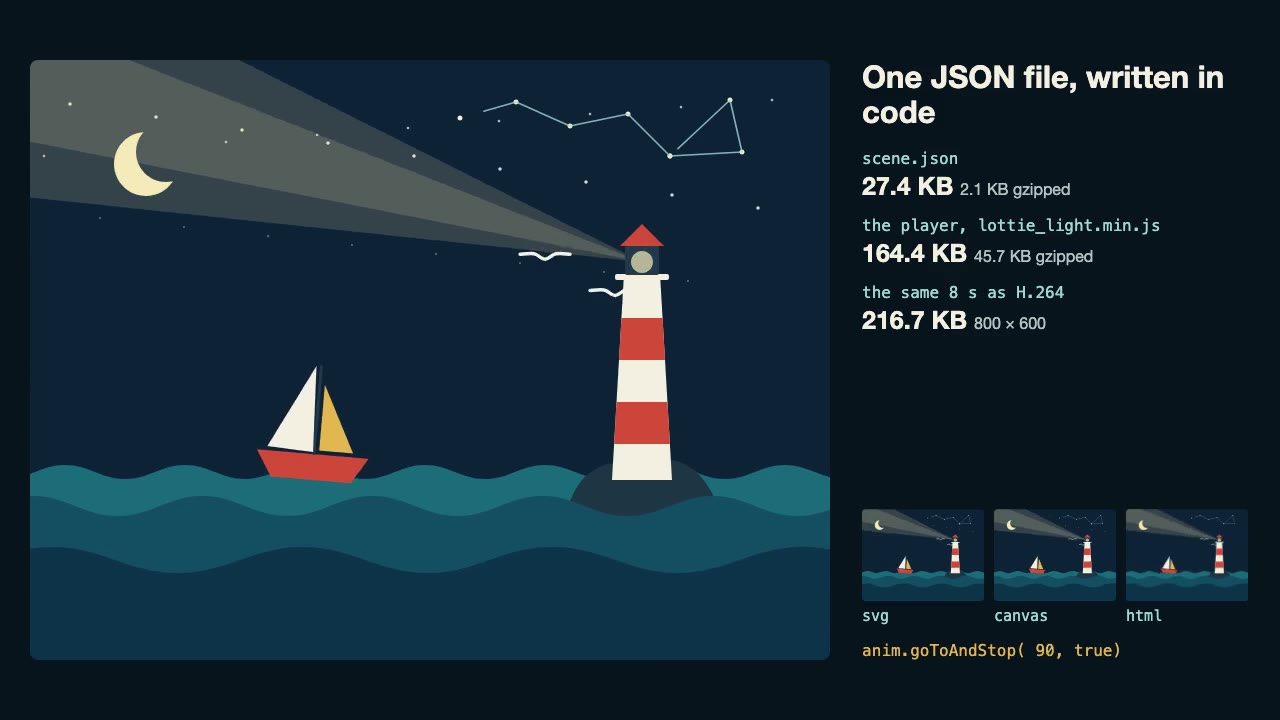
Lottie Animation
Write an original Lottie animation as JSON from a script, check that it's safe, and play it with lottie-web, with no After Effects.
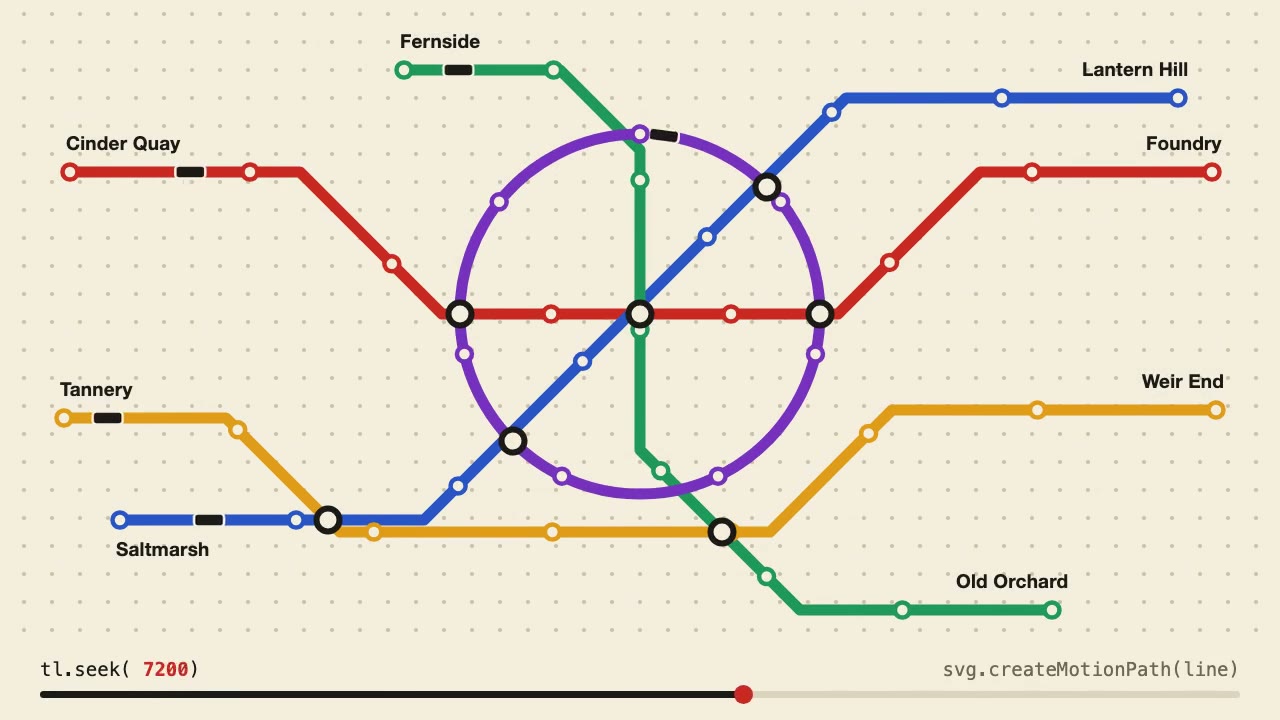
Anime.js Timelines
Choreograph grid staggers, self-drawing SVG lines and things that follow a path on one Anime.js timeline you can seek.

Blender Scenes through MCP
Have your agent build a Blender scene one step at a time, look at each result, and render the finished shot.
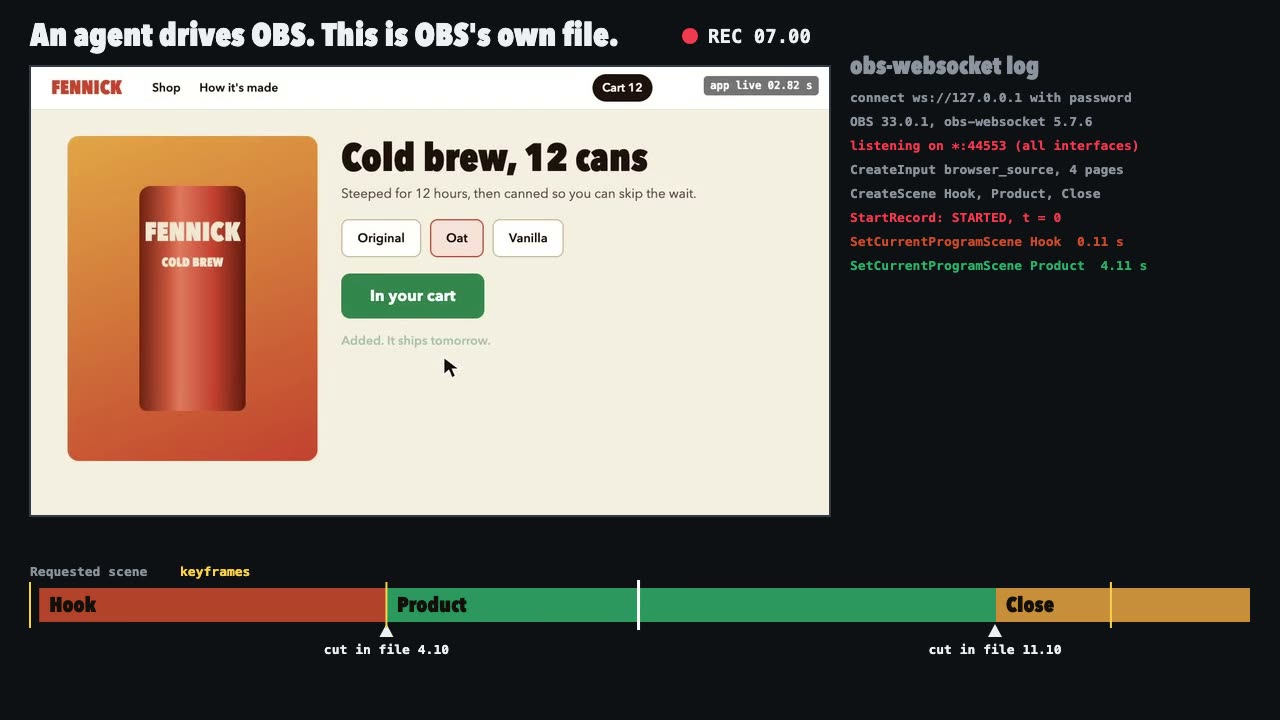
OBS Recording
Script a real OBS recording of a page with timed scene switches, then check the file it wrote.
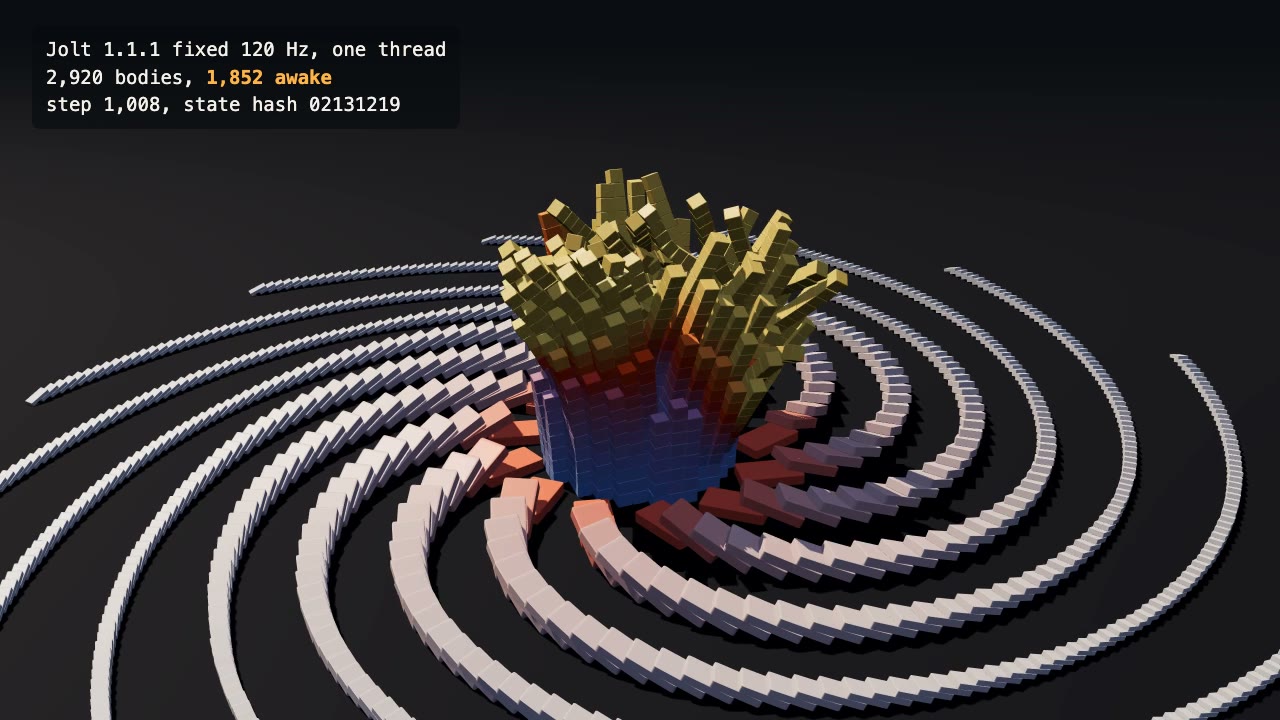
Jolt Physics Simulation
Simulate thousands of rigid bodies with Jolt and render the collapse, repeatably, frame by frame.