
About this skill
Scrolling becomes the page's timeline: a scene pins, a number climbs or an object changes while the reader scrolls, and the scene lets go. The skill starts from a brief the user fills in, with one true fact the page is built around, the scenes and how long each one pins, one WebGL element, hex colours and named typefaces, and the final copy. The agent builds the static page first, adds Lenis and ScrollTrigger one scene at a time, then the WebGL element, and keeps a reduced-motion version that shows every scene's last state. A lint flags the marks of a generated page, such as violet gradients, blurred blobs and emoji bullets. A Playwright script scrolls the page with the wheel and reports frame times, long tasks and layout shift, reloads it with reduced motion, with JavaScript off and at phone width, and saves screenshots of each pass.
You say
Using this skill, ask me the brief's questions for my bakery's site, then build it with one pinned scene where the oven temperature climbs and a three.js loaf that browns as I scroll. Run the scroll check and show me the desktop and phone screenshots.
How it works
- Your agent asks the brief's questions: the one fact the page is built around, the scenes, the WebGL element, colours, type and the final copy.
- It builds the static page first, which is also the reduced-motion version, then adds smooth scroll and one scene at a time.
- It lints the source for the marks of a generated page and fixes or justifies each finding.
- It scrolls the built page in Chrome, reads the frame report and the screenshots, fixes what failed, and records a preview clip.
Getting a good result
- Give the page one number that changes. A readout that climbs as you scroll explains itself; decoration does not.
- Pin for two or three viewport heights at most. Longer pins feel like the page has stopped.
- Look at the reduced-motion screenshots. If the page reads well there, the motion is adding to it rather than holding it up.
What you get
- A brief format with a field for every choice the model would otherwise guess, and a filled example
- A working example site: a pinned firing scene, a scrubbed text reveal, a sideways track and a three.js bowl
- Recipes for Lenis with ScrollTrigger, pin and scrub, text reveals, the WebGL element, and React and Next.js
- A lint for the marks of a generated page, and a table of what to do instead of each
- A Playwright check for frame times, long tasks, layout shift, reduced motion, the page without JavaScript and phone overflow, and a recorder for a preview clip
Good fit
- Launch pages, portfolios and product stories that need one memorable scroll moment
- Agents that write front-end code and can run Node and a browser
- Teams that want motion measured, not just approved by eye
Not for
- Dashboards, docs and forms, where scroll should just scroll
- Sites whose visitors are mostly on low-end phones, where pinned scenes and WebGL cost battery and frames
- Pages with many WebGL scenes; the skill keeps to one element
How to install it
- Download the ZIP and unzip it.
- Move the folder holding
SKILL.mdinto your agent's skills folder, such as~/.claude/skills/for Claude Code. - Start a new session and ask for what you want to make.
Needs: An agent that reads skills, Node 20 or later and Playwright with Chrome, for the check and the recorder, ffmpeg, only to record the preview clip.
Popular on X
Posts showing demand for this kind of video. Unless a post names this tool, it wasn't made with it.
- A post listing five UI and UX sites for builders, this library among them 98,508 views on X, measured 8 November 2026
FAQ
What does it cost?
$2.99 once for this skill, or $99 once for every skill in the library. It also comes with every paid AdAnt plan, from $15 a month. It runs on your own computer and uses no AdAnt credits.
Can I use it in commercial work?
Yes. You can use the skill and what it makes in your own commercial work, including for clients. You can't resell the skill.
Do I need to pay for GSAP?
No. GSAP and all of its plugins, ScrollTrigger included, have been free for commercial use since version 3.13, under GSAP's own license, which rules out building a visual website builder that competes with Webflow. three.js and Lenis are MIT. The example loads pinned versions of all three from a CDN, and a real project should install them with npm.
How fast is the example site?
In headless Chrome on an Apple M-series laptop, the check recorded 318 frames over the whole scroll with a 95th-percentile frame time of 17.4 ms, one frame over 33 ms, no long tasks and a layout shift of 0.005. Headless frame times are a guide rather than a measurement of a real screen, so the skill says to compare runs on one machine. With reduced motion or with JavaScript off it pins nothing and hides no text, and at 390 px wide it does not scroll sideways.
Does it work with Next.js?
Yes. The recipes create Lenis once in a client provider in the root layout, put each page's scenes and the three.js element in client components that undo everything when they unmount, and refresh ScrollTrigger after each route change. The example site is plain HTML so it runs from any static server without a build.
Is this the site that inspired it?
No. The idea comes from a library of scroll-driven website prompts, linked on this page, whose prompts are only for its members. AdAnt wrote this skill, its brief format, scripts and example site without them, and the library's makers did not write or review it. The clip on this page is AdAnt's example site, recorded with this skill's script.
Can I use what it makes commercially?
Yes. The pages you build are yours. The scripts and the example site are MIT, and the license text is in the ZIP.
Related skills
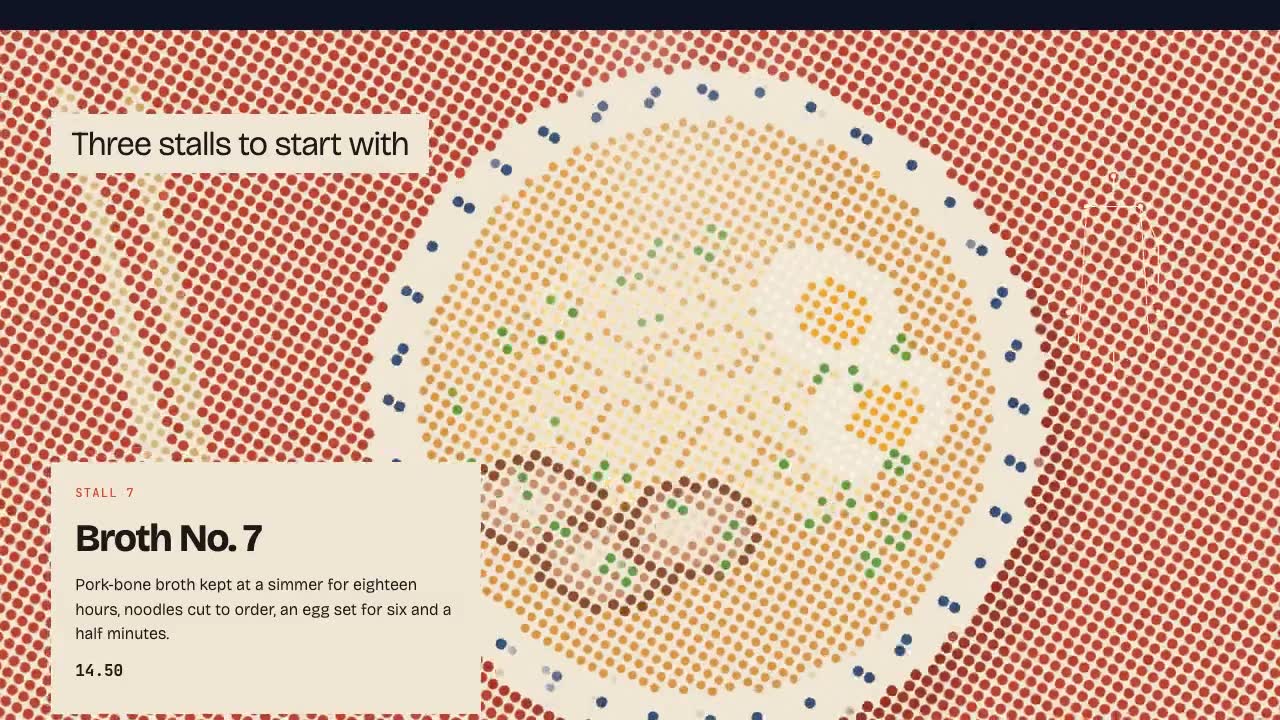
Shader Reveal Site
Have your agent build a page where the pointer or the scroll uncovers a second picture through a shader, then measure the trail, the GPU and every fallback in Chrome.

Scroll-Scrubbed Film Site
Have your agent build a landing page where scrolling plays a film frame by frame, with chapters, callouts and a preloader, then check it in Chrome.

Cinematic Video Hero
Have your agent build a one-screen hero from footage and type, with a freeze frame, text behind the subject and a loop, then measure it in a real browser.

Cursor Playground Hero
Have your agent build a hero section visitors play with, on small simulations that behave the same on every screen and never blow up.
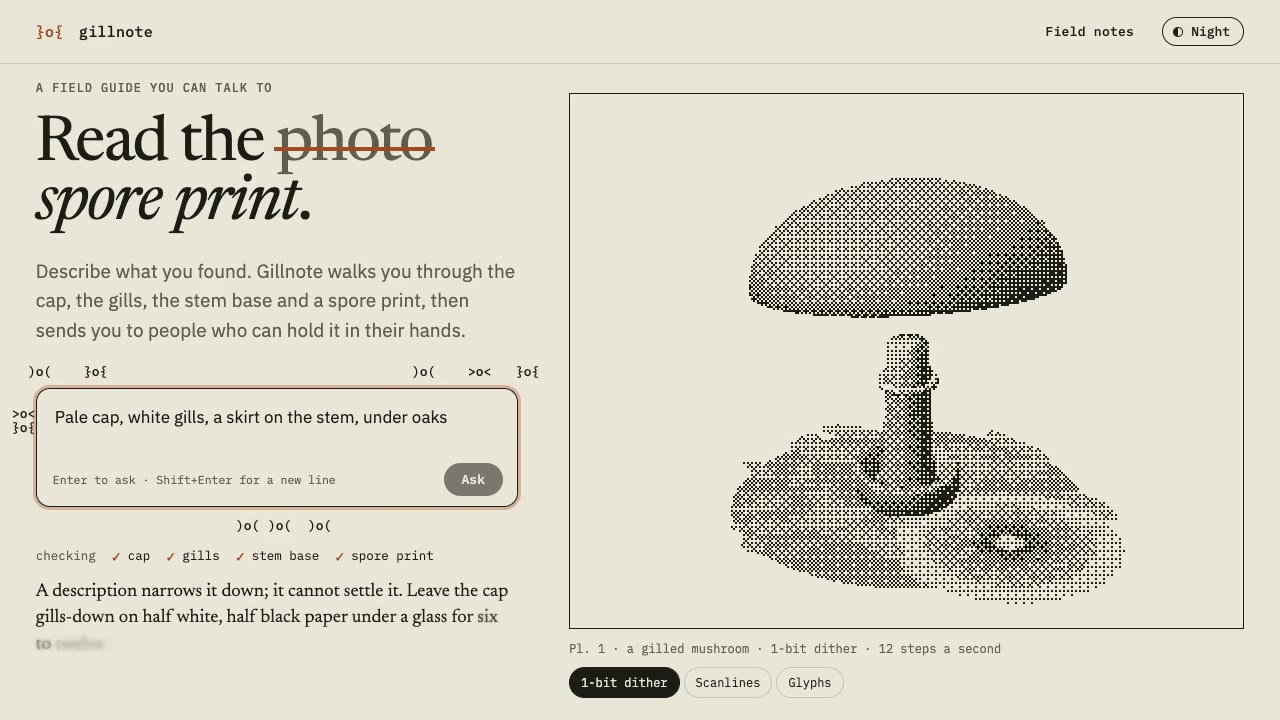
Dither & Glyph Hero
Have your agent build a hero that draws a live 3D scene in two inks, as dither, scanlines or glyphs, around an AI prompt, then check it in Chrome.
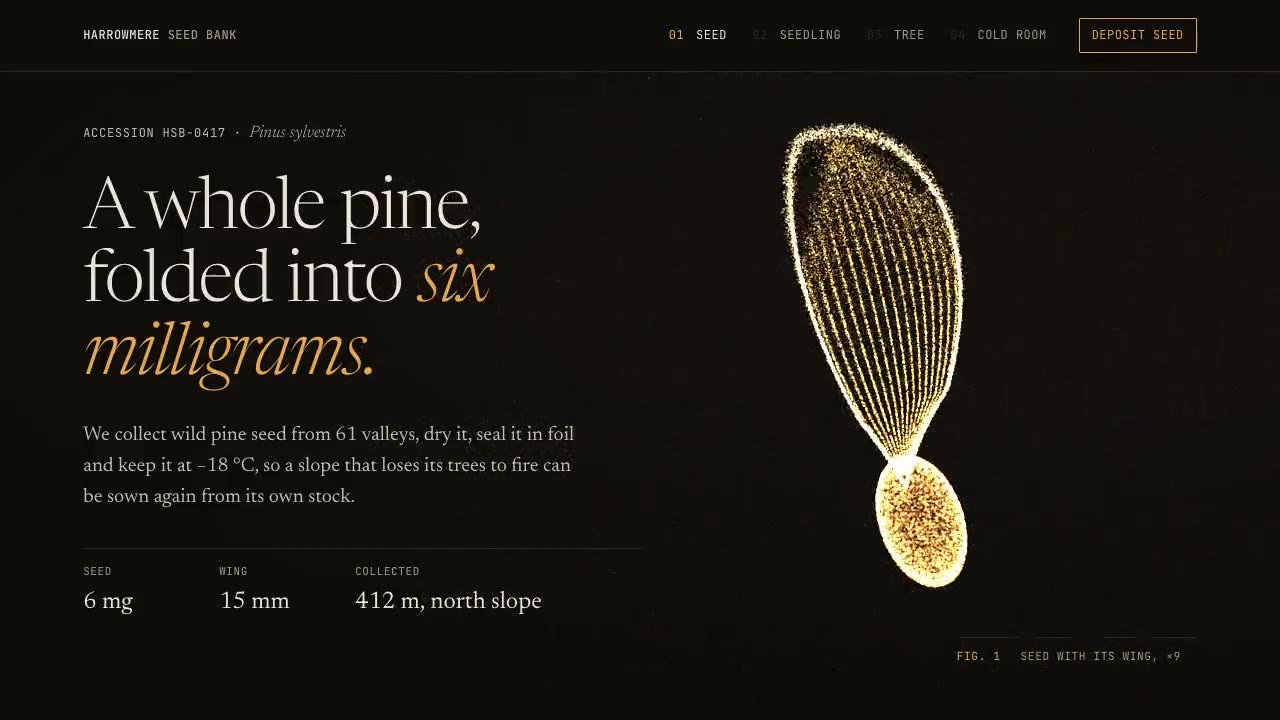
Particle Form Hero
Have your agent build a hero where GPU particles settle into your shape, morph to the next as the page scrolls, and part around the pointer.
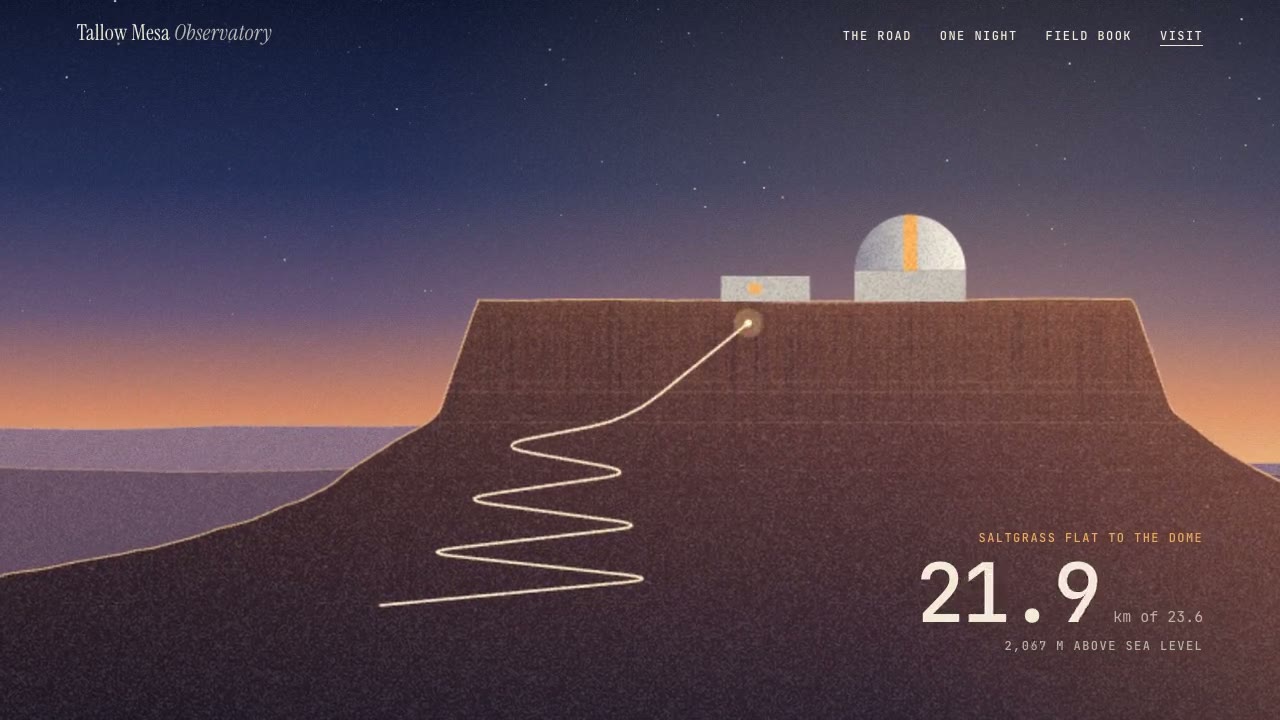
Parallax Plates Site
Have your agent split one picture into depth plates and build a page that flies through them on scroll, then prove in Chrome that no plate edge ever shows.

Cursor-Gaze Character
Have your agent build a landing page whose character turns its head to follow the pointer, from frames it renders once, then measure it in Chrome.

Footage Landing Page
Have your agent build a full landing page under a looping footage hero, every word in one content file, then check it in Chrome.
Scroll-Posed 3D Product
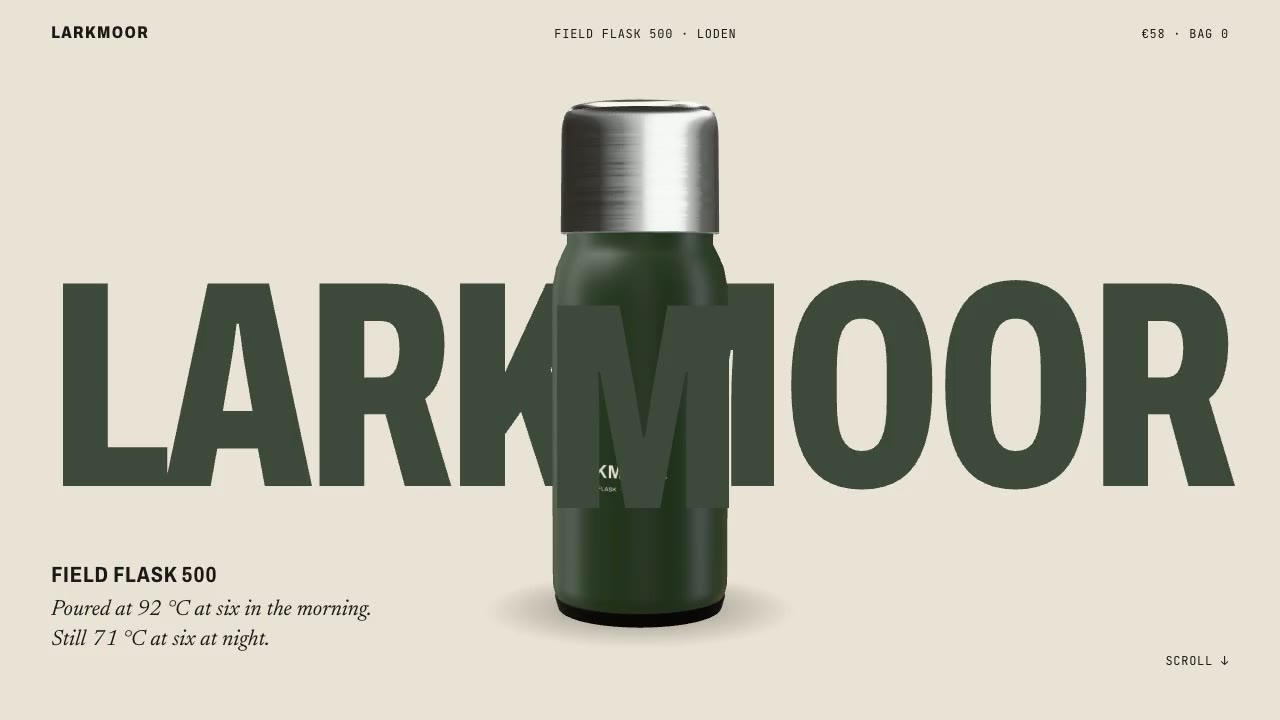
Have your agent build a page where one 3D product holds the centre while the scroll poses it, section by section, until it docks into the buy box.
Drag Gallery Storefront
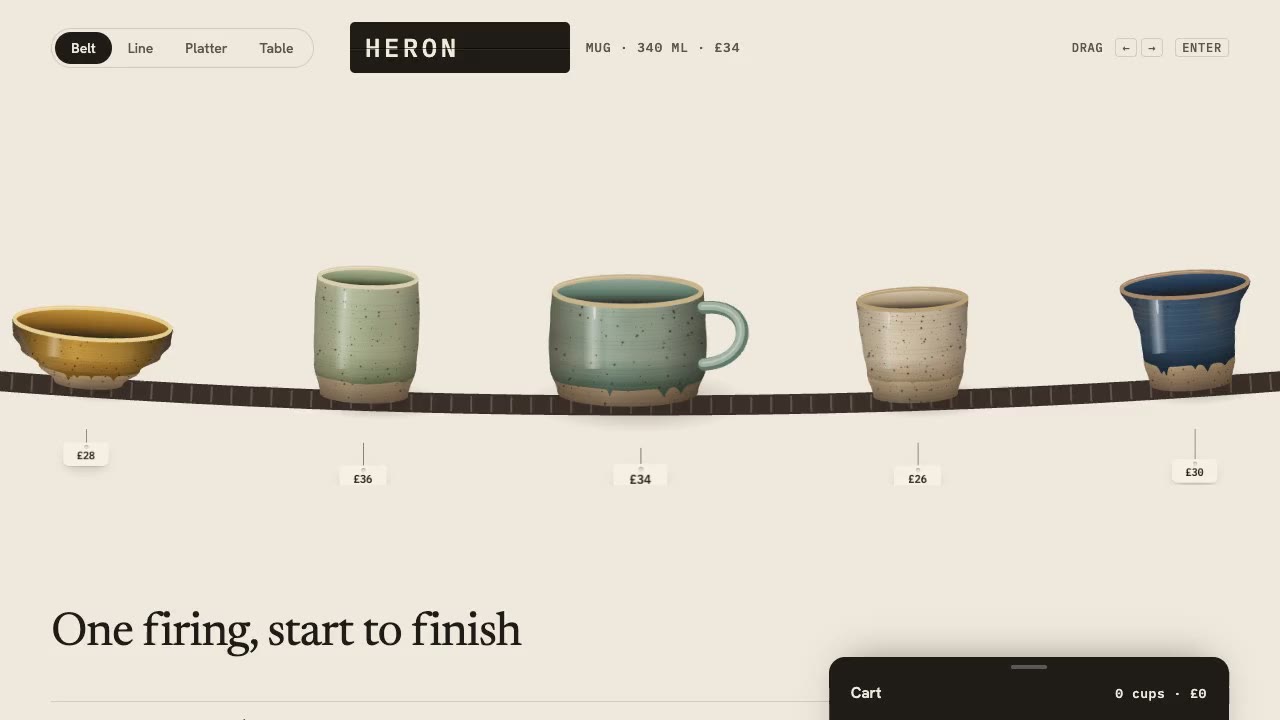
Have your agent build a shop you browse by dragging, with inertia, a seamless loop, a product sheet and a cart, then check it in Chrome.
UI Morph Loop
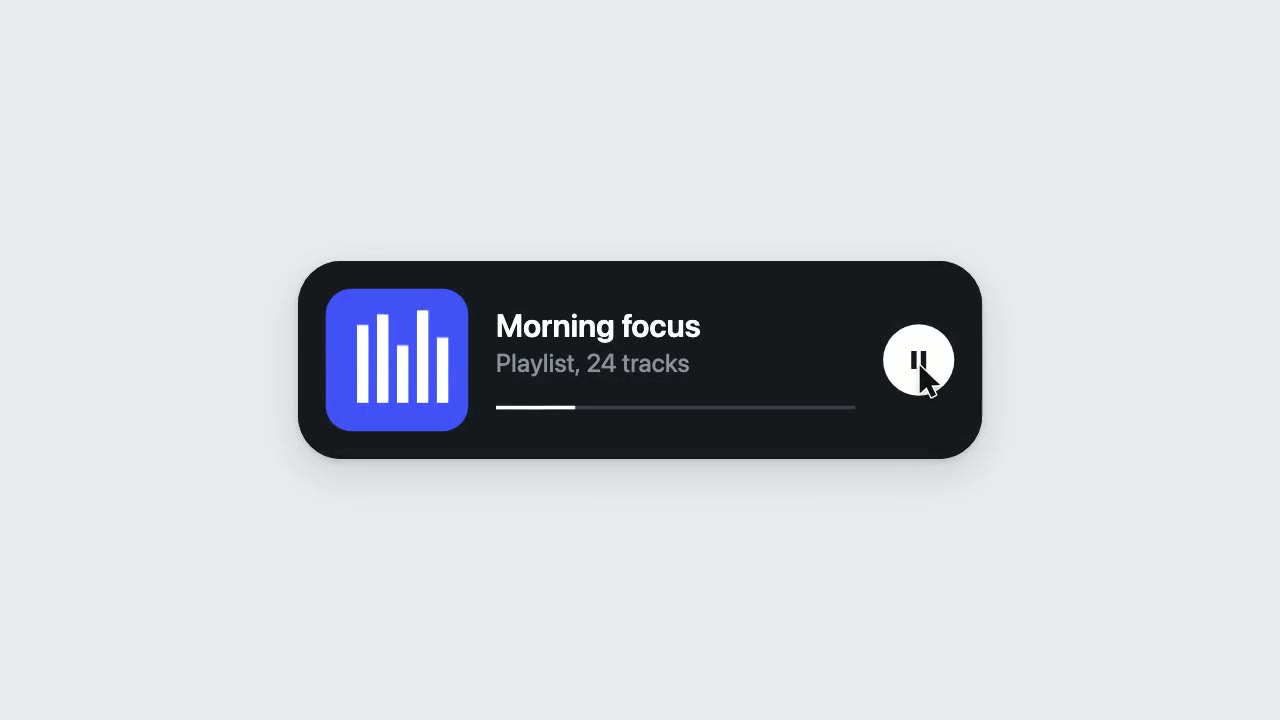
Have your agent make a looping clip where one element turns into a button, toggle, slider, search field, notification and player, with a cursor that clicks and drags to cause each change.