
About this skill
WhisperX gives each spoken word its own start and end. This skill runs it on a CPU with a small model, writes SRT and VTT files plus a JSON that a renderer reads, and animates captions from that file, so nothing is placed by hand. If you have the script, it aligns your exact words to the audio instead of transcribing, so a product name can't be misheard, though it can't catch a word that wasn't said. A check then reads the audio to confirm that words sit on sound and pauses on silence. It doesn't use diarization, which needs gated models and a token.
You say
Here's voiceover.wav and script.txt. Align the script to the audio, give me SRT and VTT, and render 1080p captions that highlight each word as it's spoken.
How it works
- Your agent asks, then installs WhisperX 3.8.6 in a project folder and tells you what it downloads.
- It aligns your script to the clean voice, or transcribes if you have no script, on the CPU.
- It writes SRT, VTT and words.json, then reads the audio to check that the words sit on sound.
- Your renderer reads words.json and highlights each word as it's spoken.
Getting a good result
- If you wrote the script, align it. Transcribing misheard both tool names in our test, and aligning keeps your words.
- Caption the clean voice before the music goes in. The times stay valid after you mix, as long as the voice doesn't move.
- Show the whole caption line with the current word marked. People read ahead, so one word at a time is harder to follow.
What you get
- A script that aligns your text to speech, line by line if you like, or transcribes when you have none
- SRT, a VTT with a time tag per word, and a words.json for any renderer
- A Canvas page with word-highlighted captions and a timeline of the real word spans
- A check of the times against the audio, with a control that has to fail
- An ffmpeg recipe to duck music under the voice without moving it
- The clip's script, to reproduce it with cosyvoice-voiceover
Good fit
- Short-form ads and reels with captions that track the voice
- Voiceovers with brand names a transcriber would get wrong
- Makers without a GPU, on a Mac or a laptop
Not for
- Telling speakers apart: that needs pyannote's gated models, a Hugging Face account and a token, which this skill doesn't use
- Live captions
- Publishing a transcript nobody has read: names and numbers still need a human check
How to install it
- Download the ZIP and unzip it.
- Move the whisperx-captions folder into your agent's skills folder, such as ~/.claude/skills/. Your agent asks before it installs WhisperX in a project folder.
- Start a new session and ask for what you want to make.
Needs: An agent that reads skills, uv and ffmpeg, About 1.8 GB of disk for packages and models, Node.js 22 or later and Chrome, for the example page.
FAQ
What does it cost?
$2.99 once for this skill, or $99 once for every skill in the library. It also comes with every paid AdAnt plan, from $15 a month. It runs on your own computer and uses no AdAnt credits. WhisperX is free, is not in the ZIP, and runs on your own machine with no key or account.
Can I use it in commercial work?
Yes. You can use the skill and what it makes in your own commercial work, including for clients. You can't resell the skill.
What does setup download and run?
After asking, it installs WhisperX 3.8.6 with PyTorch from PyPI, about 960 MB, into a project folder. On first use it downloads the English aligner WAV2VEC2_ASR_BASE_960H through torchaudio from download.pytorch.org (378 MB, MIT as torchaudio's docs state) and NLTK's punkt_tab sentence data from GitHub (4 MB, with no license in NLTK's index). Transcribing also downloads Systran/faster-whisper-small from Hugging Face (486 MB, MIT on its model page, no login). Other languages load other aligners, each with its own terms. Pointing HOME at a project folder keeps the caches there.
Do I need a Hugging Face token?
No, not for word timing. Only diarization, which labels who is speaking, needs a token: it uses pyannote's gated models, whose terms you accept with your own account. This skill leaves it out, and we didn't run it.
Can I use it commercially?
WhisperX's code is under the BSD-2-Clause license, which allows commercial use if you keep its notice with copies of it. The models are separate from the code: the two English ones are MIT, as their pages state, while other languages load other models, so read each one's page and have someone check the terms if this is for a business. You also need the rights to the speech you caption.
What did AdAnt run, and what didn't it?
We ran WhisperX 3.8.6 on an Apple M4 CPU. The clip's captions come straight from its JSON, made by aligning our 36-word script to the speech in about 8 seconds, which uses the aligner and no Whisper model. Separately, transcribing the same speech with small and int8 took about 15 seconds and misheard both tool names. The speech is CosyVoice's preset voice, made with cosyvoice-voiceover, and the music underneath is the numpy track from librosa-beat-sync. We only tested English, and we didn't run diarization, a GPU or speech over 12 seconds.
How accurate are the word times?
We have no ground truth for them. The check confirms that all 36 words sit on sound and that the pauses are quiet, and that the same test fails when the words move 400 ms. It doesn't prove each boundary to the millisecond, so watch the result too. One word, "X", scored 0.02 yet landed in the right place, so a low score isn't a verdict.
Related skills
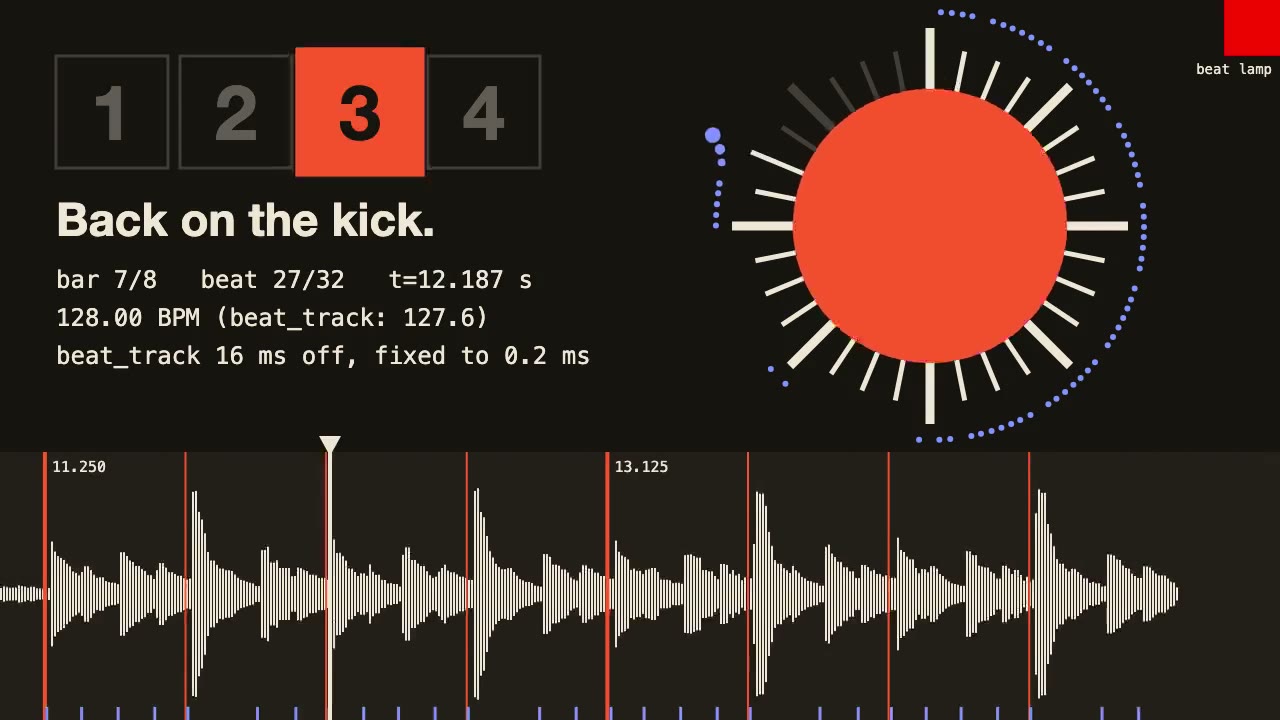
librosa Beat Sync
Measure a track's beats with librosa, drive an animation from the JSON it writes, and prove the sync by measuring the video.
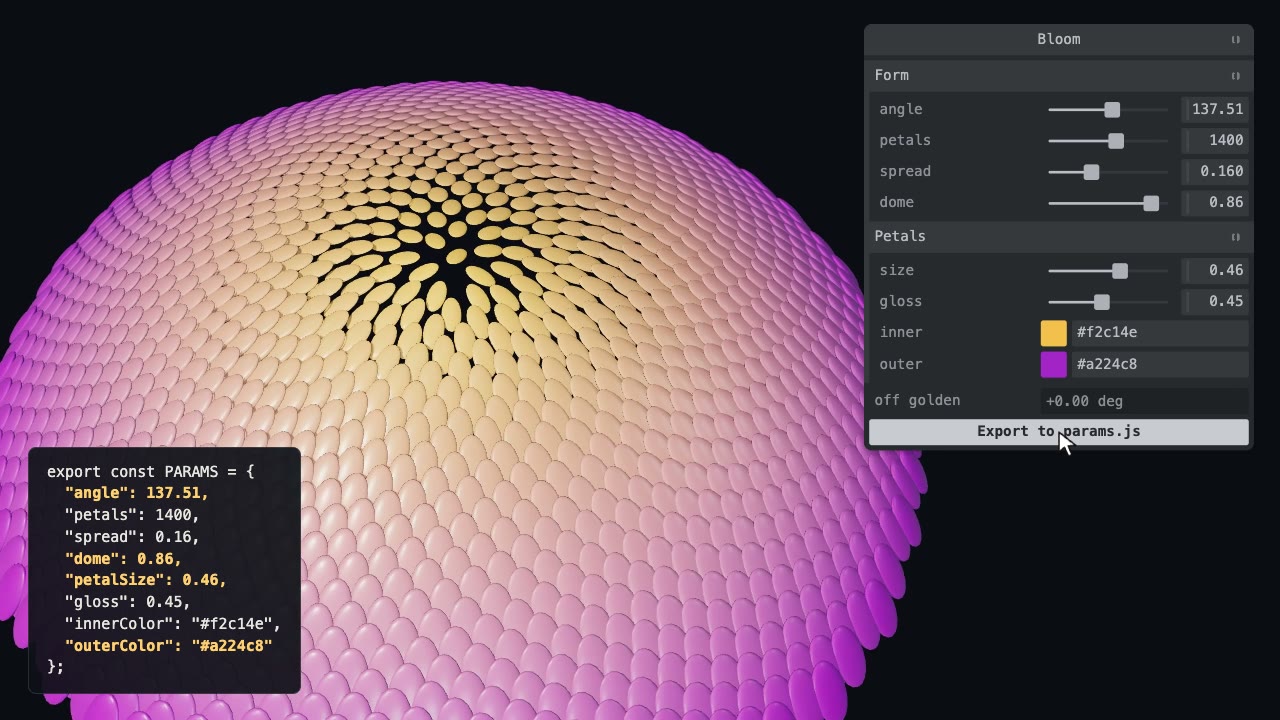
Tweakpane Live Tuning
Add a live panel to an animation so you can tune it by hand, then write the values you chose back to the code.
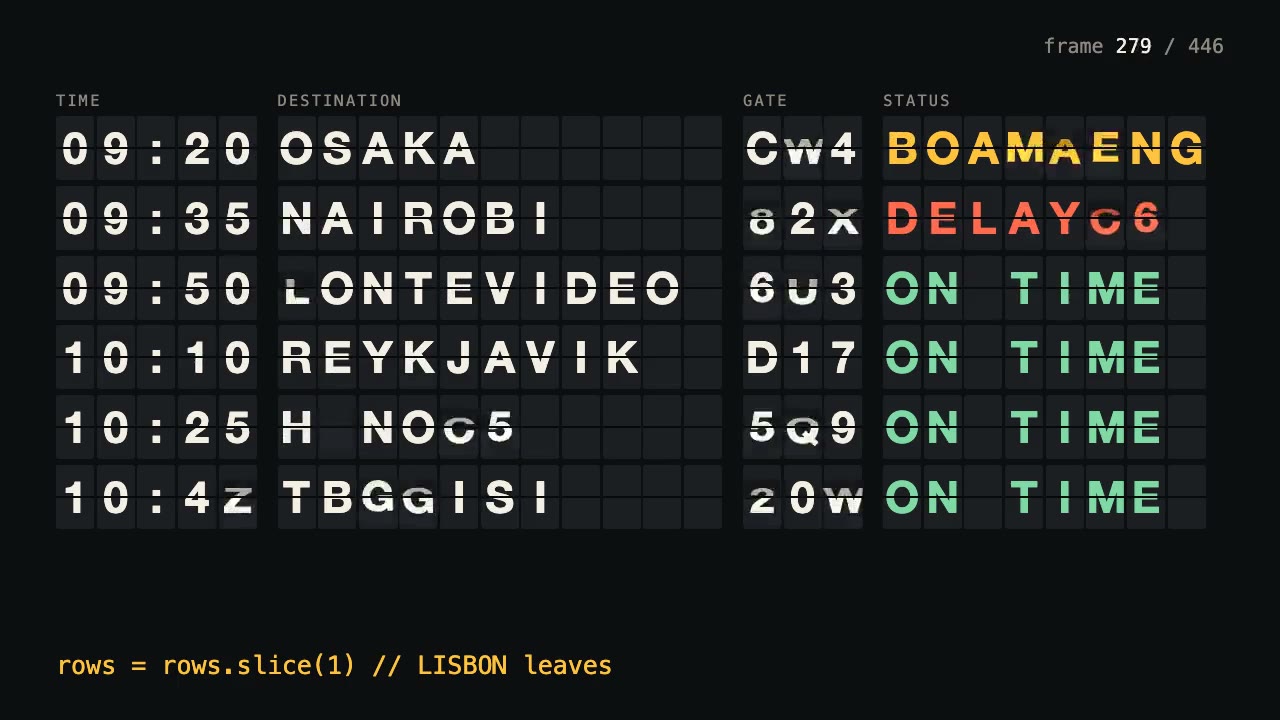
Remotion Video
Make video as React components, where every frame comes from the frame number, and render one template for any data.
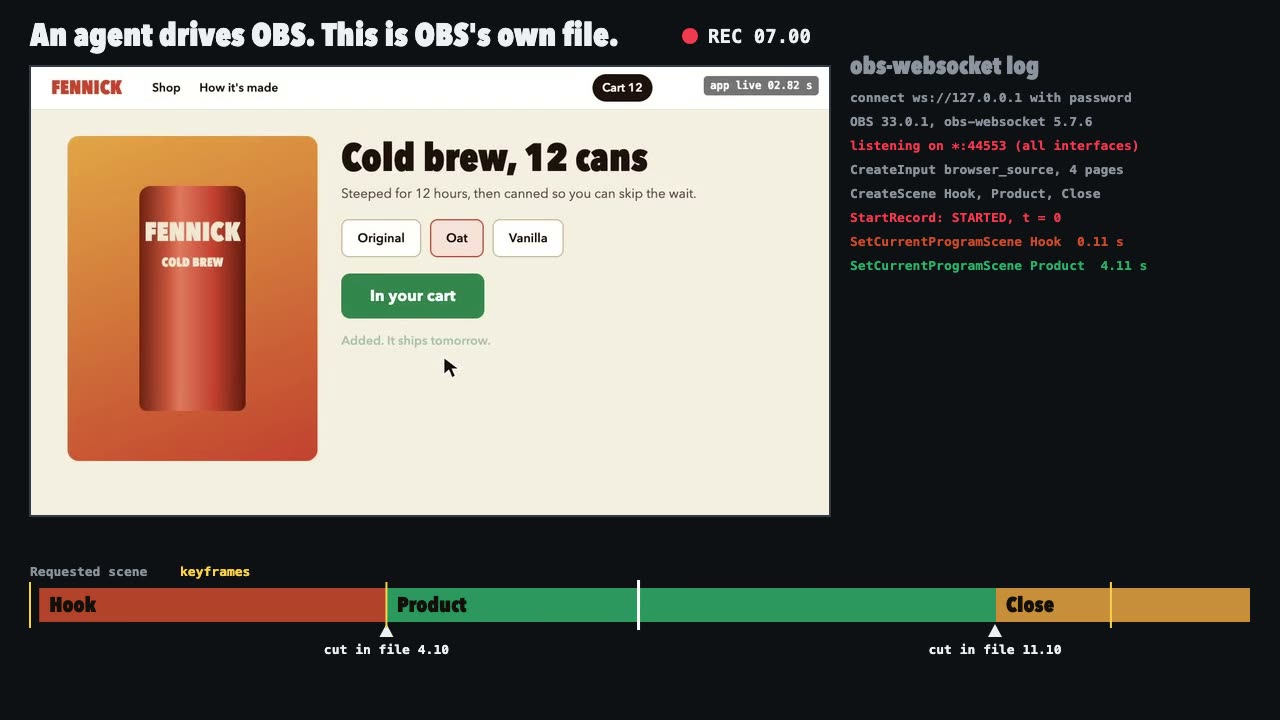
OBS Recording
Script a real OBS recording of a page with timed scene switches, then check the file it wrote.
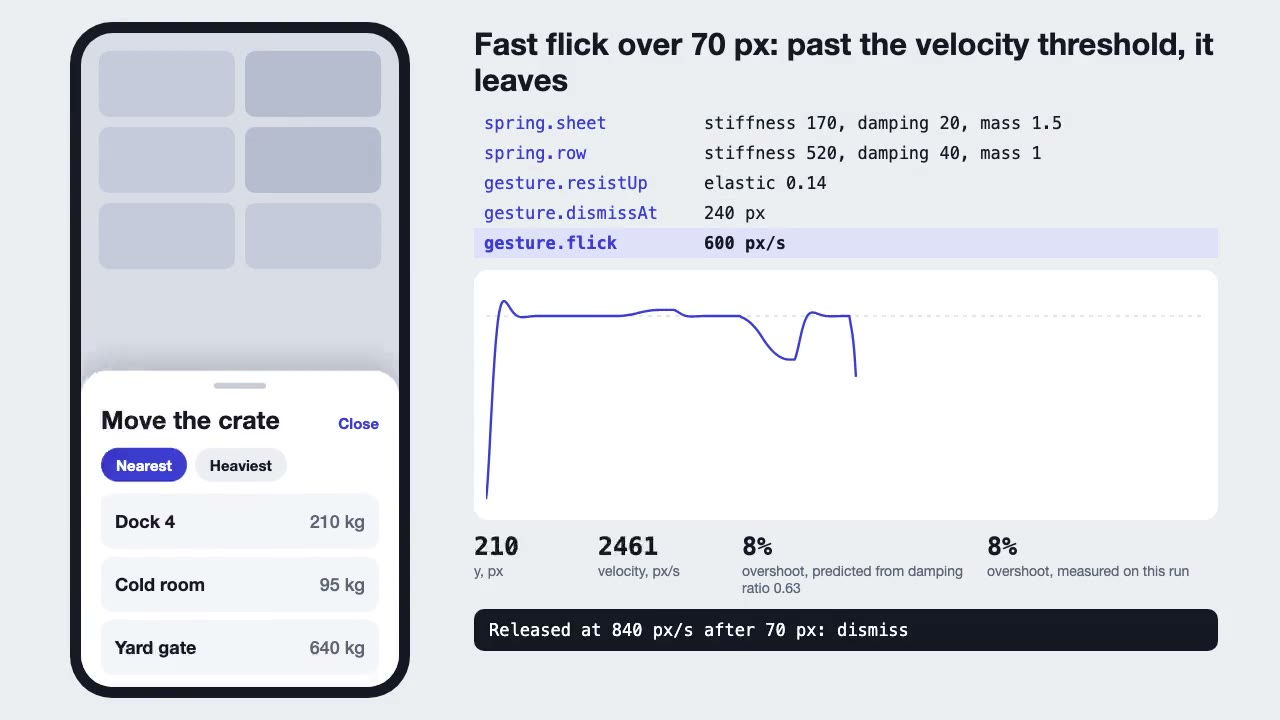
Motion UI Animation
Build UI animation with springs, layout transitions and gestures from one written motion language, with a linter that catches drift.
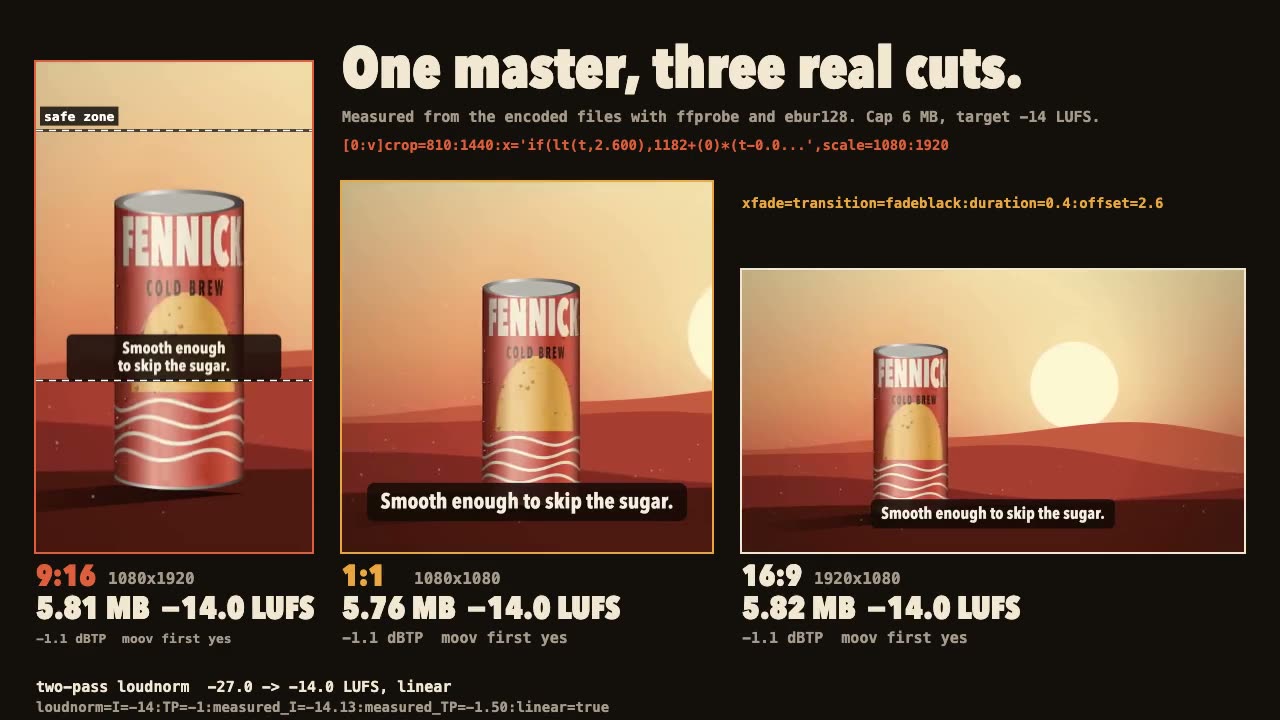
FFmpeg Finishing
Turn one master into 9:16, 1:1 and 16:9 files with safe-zone captions, measured loudness and a size cap.
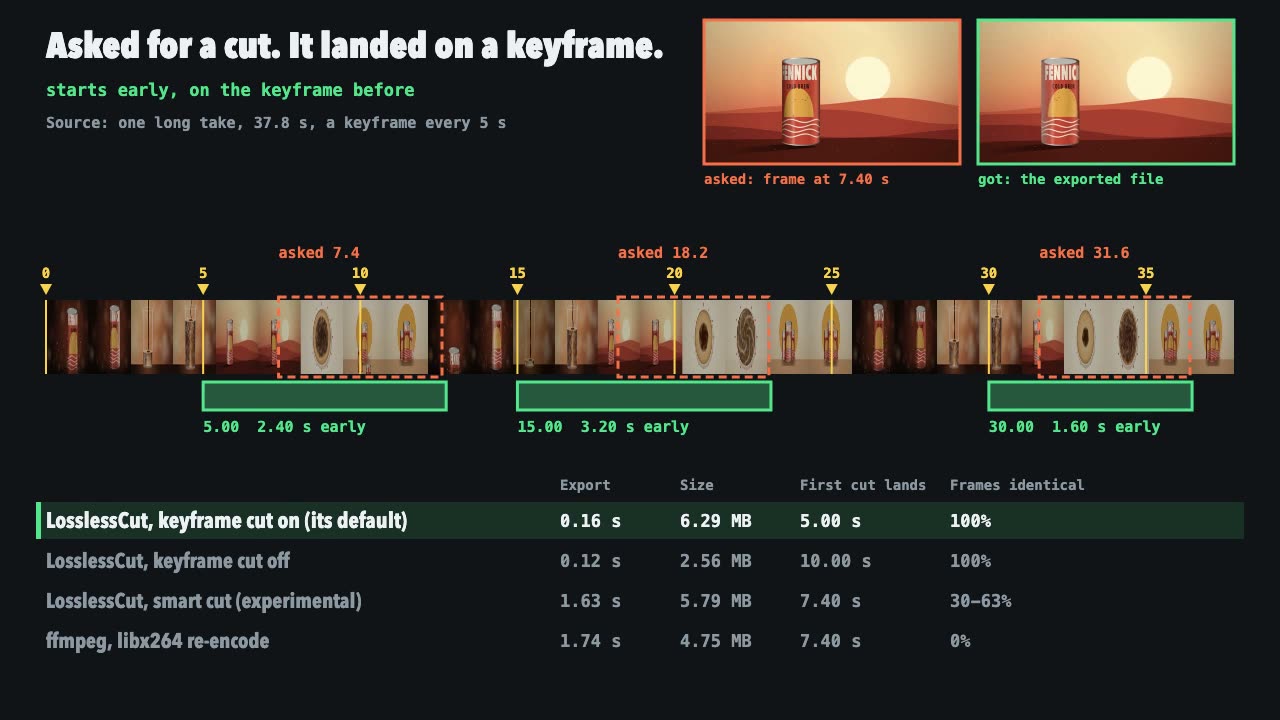
LosslessCut Trims
Cut long recordings fast without re-encoding, and measure where each cut really landed.

Three.js Postprocessing
Give a flat three.js shot HDR bloom, depth of field, tone mapping and a color grade, in the right order.
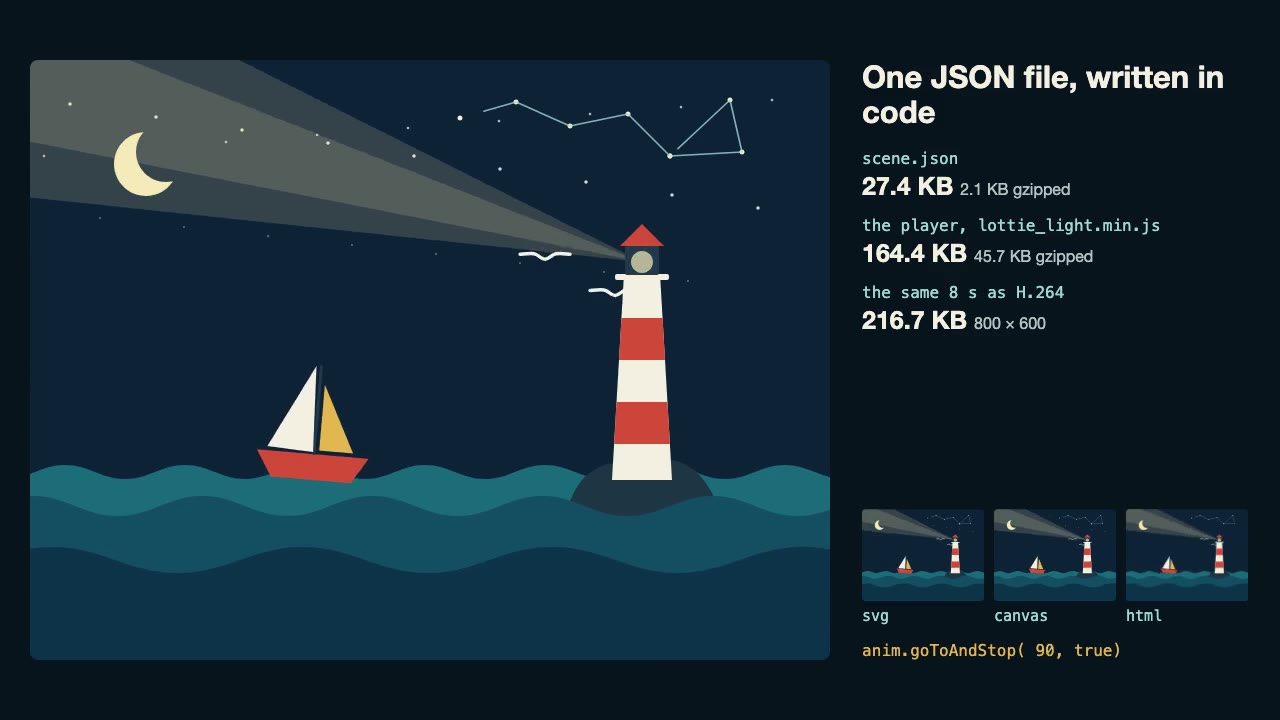
Lottie Animation
Write an original Lottie animation as JSON from a script, check that it's safe, and play it with lottie-web, with no After Effects.

three.quarks VFX
Make trails, sparks, shockwaves and fireworks in three.js, on a seeded clock, so a frame renders the same again on the same machine.
Anime.js Timelines
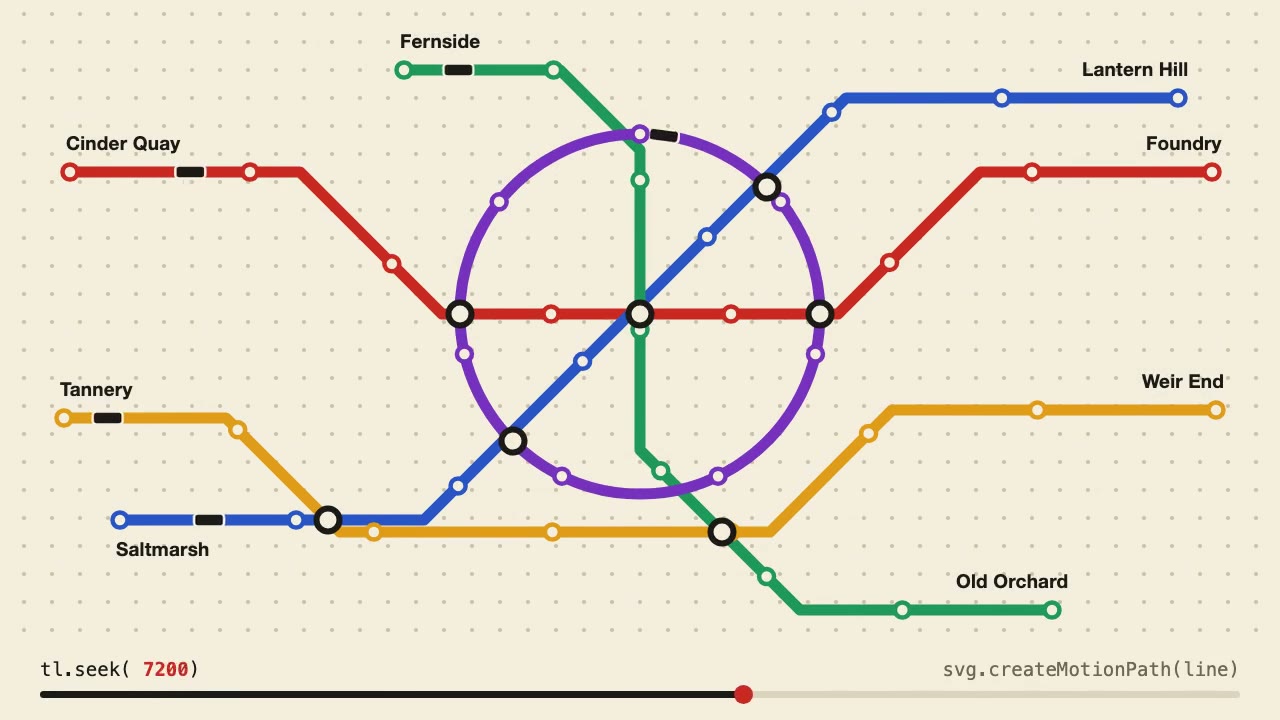
Choreograph grid staggers, self-drawing SVG lines and things that follow a path on one Anime.js timeline you can seek.

Blender Scenes through MCP
Have your agent build a Blender scene one step at a time, look at each result, and render the finished shot.